





Metal Tantalum
Metal tantalum is a chemical element; it has symbol Ta and atomic number 73. Previously known as tantalium, it is named after Tantalus, a figure in Greek mythology. Tantalum is a very hard, ductile, lustrous, blue-gray transition metal that is highly corrosion-resistant.
Benefits of Metal Tantalum
Corrosion resistance: Metal tantalum are highly resistant to corrosion from acidic and alkaline environments. This makes them ideal for use in chemical processing equipment.
High melting point: Tantalum has a melting point of 2996°C, making it an excellent choice for high-temperature applications.
Ductility: Metal tantalum are highly ductile and can be easily formed into various shapes, making them suitable for various industrial uses.
Biological compatibility: Due to its resistance to corrosion, metal tantalum is biocompatible and is therefore often used in medical implants.
Low thermal expansion: Metal tantalum has a low coefficient of thermal expansion, making it ideal for use in high-precision devices such as scientific equipment.
High conductivity: Metal tantalum has high electrical conductivity, making it an excellent choice for electronic components and other electrical applications.


Why Choose us
Quality assurance
Zhenan operates a very strict quality control system, including raw material selection, production control, product inspection, fine packaging and delivery. All products undergo rigorous analysis and each order is inspected by relevant processes before shipment.
Professional service
With extensive experience in high-purity materials, we can help customers select materials, design products and provide technical support. We have independent laboratories to develop and test new materials and provide technical consultation to customers.
We Offer The Most Competitive Prices
Zhenan provides the most competitive prices for various products. We maintain close cooperation with industry leaders in China to obtain low-cost and high-quality materials. At the same time, we have established a complete supply chain system to reduce costs, and we always pursue efficient mass production and scientific management.
Metal tantalum has several unique characteristics that have led to its increased use in the 21st century. It is a highly stable metal that is almost immune to chemical degradation at temperatures lower than 302 °F (159 °C). In addition, it exhibits high levels of corrosion resistance when it comes into contact with air and moisture.
Like most metals, metal tantalum forms a thin but dense protective oxide layer (Ta2O5) when exposed to the atmosphere. This oxide layer firmly adheres to the surface of the metal, acting as a barrier which protects the underlying metal from further corrosion.
Metal tantalum belongs to a class of metals known as refractory metals, which are defined by their strong resistance to heat and wear. It has a melting point of 5,463 °F (2,996 °C), the fourth highest of all metals.
In terms of mechanical properties, metal tantalum is highly ductile, making it suitable for processes such as bending, stamping, and pressing. When combined with other metals, it can produce alloys with enhanced strength and higher melting points.
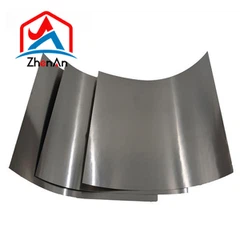
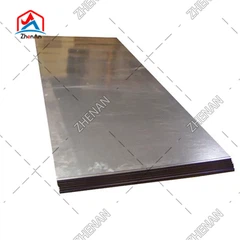
Sheet/Plate – Metal tantalum high melting point makes it ideal for high-temperature applications. In sheet form, it is commonly used in linings for columns, vessels, tanks, heat exchangers, and vacuum furnace parts. Thin sheets can also be used for anti-corrosion cladding, repairs, and reinforcement of existing
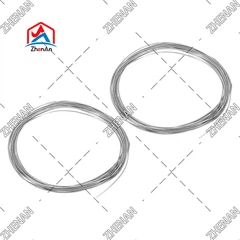
Rod/Wire – Metal tantalum is also known for its biocompatibility. In other words, it is a nonirritating element that is not affected by bodily fluids. This property makes tantalum wires a popular material for prosthetic implants and other medical devices. In addition, tantalum wires are commonly used in vacuum furnace heating elements, chlorinator springs, light bulb elements, and chemical processing equipment.
Powder
In its powder form, tantalum is used to produce electrical circuits, capacitors, and resistors, primarily because its superior capacitance allows it to hold more charge per gram than other materials. This has made it possible to develop smaller electrical parts and, by extension, smaller electrical devices.
Tube
Because of their heightened resistance to corrosion, tantalum tubes are often employed in the chemical, petrochemical, and pharmaceutical industries for the processing of compounds that may weaken or destroy other metals. Columns, stacks, and piping are just some of the products constructed from tantalum tubing in these industries.
Strips and foils
Similar to sheets, tantalum strips and foils can be used as liners in vacuum furnaces and heat insulation applications. Thin-gauge tantalum strips can also be deep drawn to manufacture crucibles, cups, and other inert laboratory equipment.
Tantalum-Niobium (Ta-Nb) Alloys
Tantalum-Niobium alloys are prized for their corrosion resistance. These alloys find their way into chemical processing and aerospace, among other applications. They are known for their enhanced strength and ductility, making them versatile choices in demanding environments.
Tantalum-Hafnium (Ta-Hf) Alloys
Tantalum-Hafnium alloys are ideal for nuclear applications due to their exceptional stability at high temperatures. These alloys are used in nuclear reactors, ensuring the safe containment of radioactive materials.


Tantalum-Titanium (Ta-Ti) Alloys
In the medical field, tantalum-titanium alloys are utilized for biocompatible implants. These alloys combine metal tantalum corrosion resistance with the lightweight properties of titanium, making them suitable for surgical implants and prosthetics.
Tantalum-Zirconium (Ta-Zr) Alloys
Ta-Zr alloys are corrosion-resistant materials often employed in chemical processing. Their ability to withstand hot acids and aggressive chemicals makes them crucial for industries that deal with corrosive substances.
Tantalum-Nickel (Ta-Ni) Alloys
Ta-Ni alloys are popular in electronic components, as they offer tailored electrical properties. They provide a balance between electrical conductivity and corrosion resistance, making them ideal for various electronic devices.
The preparation of metal tantalum is the process of reducing pure tantalum compounds to metal tantalum. The raw materials are five tantalum oxide, tantalum chloride, five tantalum fluoride, and fluoride (such as K2TaF7,). The reducing agent is sodium, magnesium, other active metals, and carbon and hydrogen. The melting point of tantalum is as high as 3669K, so it is powder or spongy metal after reduction. It is necessary to further smelting or refining, in order to get dense metal.
The metal tantalum preparation methods are sodium thermal reduction, carbon thermal reduction, and molten salt electrolysis. Sodium thermal reduction of potassium tantalate is the most widely used method of tantalum production in the world.
The tantalum powder has a complex shape and a large specific surface area. Carbon thermal reduction of five oxidation of tantalum has been an industrial method for the production of tantalum, but because the purity of the product is not high enough, is not as widely used as the sodium reduction method. The molten salt electrolysis method is divided into two ways: electrolyte electrolysis and oxygen-free electrolyte electrolysis. Molten salt electrolysis can only produce metallurgical grade tantalum powder. Five hydrogen fluoride reduction is considered to be one of the most promising methods for tantalum production, but it has not been used in industrial production because of the high requirements of equipment material and environmental protection.
The majority of tantalum powder is directly used for tantalum capacitors in the electronic manufacturing industry, so the tantalum milling process, such as the preparation of metal tantalum is also from tantalum and tantalum powder by vacuum heat treatment, capacitor grade tantalum powder hydrogenation method category.
Metal Tantalum Physical & General Properties
Element Category – Transition Metals
Phase – Solid
Symbol – Ta
Number – 73
STD Atomic Weight – 180.94788
Crystal Structure – Body Centered Cubic
Melting Temperature – 5463° F, 3017° C, 3290 K
Boiling Temperature – 9856° F, 5458° C, 5731 K
Electrical Resistivity – 20° C, 131 nΩ·m
Thermal Conductivity – 300 K, 57.5 W·m−1·K−1
Thermal Expansion – 25°C, 6.3 µm·m−1·K−1
Standard Specifications
Metal tantalum Ingot – ASTM B364
Tantalum Rod and Wire – ASTM B365
Tantalum Tubing – ASTM B521
Tantalum Sheet, Plate, Strip and Foil – ASTM B708
Medical Grade Tantalum – ASTM F560
Common Metal Tantalum (UNS Codes)
99.5% Pure 3N5
99.9% Pure 4N
99.995% Pure 4N5
99.999% Pure 5N

Keep These Things In Mind When Buying Metal Tantalum
Metal Tantalum Beginnings
Metal tantalum atomic number is 73 and its atomic symbol is Ta. Its melting point is 5,462.6 F and its boiling point is 9,856.4 F.
Named after Tantalus, a Greek mythological character, metal tantalum was first discovered in 1802. If you were to look for metal tantalum, you'd likely find it occurring naturally in the mineral columbite-tantalite which is found in a variety of countries, including Canada, Australia, Brazil, Thailand and parts of Africa.
Metal Tantalum Uses
So what's metal tantalum used for? It's most often used for electrolytic capacitors and vacuum furnace parts. You might find it in chemical process equipment as well as nuclear reactors and aircraft and missile parts. Because it's completely immune to body liquids, metal tantalum is used in making surgical appliances. Metal tantalum oxide can be used to make a special glass (with a high index of refraction) that you might find in certain camera lenses. Metal tantalum has many uses.
Industries that Are Dependent on Metal Tantalum
Metal tantalum is used in numerous industries, with a particular emphasis on the electronics industry. It's a highly stable metal with high levels of corrosion resistance. In fact, it's part of a class of metals known as refractory metals, as defined by strong resistance to heat and wear– and this is thanks to its very high melting point.
What Mineral Is Metal Tantalum Made Of?
Natural tantalum consists of two stable isotopes: 180mTa (0.012%) and 181Ta (99.988%). 180mTa (m denotes a metastable state) is predicted to decay in three ways: isomeric transition to the ground state of 180Ta, beta decay to 180W, or electron capture to 180Hf. However, radioactivity of this nuclear isomer has never been observed, and only a lower limit on its half-life of 2.0 × 10¹⁶ years has been set.The ground state of 180Ta has a half-life of only 8 hours. 180mTa is the only naturally occurring nuclear isomer (excluding radiogenic and cosmogenic short-lived nuclides). It is also the rarest primordial isotope in the Universe, taking into account the elemental abundance of tantalum and isotopic abundance of 180mTa in the natural mixture of isotopes (and again excluding radiogenic and cosmogenic short-lived nuclides).
Metal tantalum has been examined theoretically as a "salting" material for nuclear weapons (cobalt is the better-known hypothetical salting material). An external shell of 181Ta would be irradiated by the intensive high-energy neutron flux from a hypothetical exploding nuclear weapon. This would transmute the metal tantalum into the radioactive isotope 182Ta, which has a half-life of 114.4 days and produces gamma rays with approximately 1.12 million electron-volts (MeV) of energy apiece, which would significantly increase the radioactivity of the nuclear fallout from the explosion for several months. Such "salted" weapons have never been built or tested, as far as is publicly known, and certainly never used as weapons.
Metal tantalum can be used as a target material for accelerated proton beams for the production of various short-lived isotopes including 8Li, 80Rb, and 160Yb.
Zhenan New Metal Co., Ltd. has always focused on the research and development, production and sales of metal materials. Our factory covers an area of 30,000 square meters and has a full set of modern production equipment. It has two large-scale metal production plants and a metal material testing center. The quality of the metal materials produced is trustworthy.


Our Certificate


Asked Questions
We're professional metal tantalum manufacturers and suppliers in China, specialized in providing high quality customized service. We warmly welcome you to buy metal tantalum at competitive price from our factory. Contact us for more details.
tungsten alloy bar, MoLa, Pure Tungsten Flat Wire