





Pure Tungsten
Pure tungsten was used as a welding electrode at the beginning of the TIG process, back in the 1940s. TIG welding was developed to efficiently join aluminum and magnesium alloys, and pure tungsten made sense at the time, since it has the highest melting temperature of all metals.
1. Resistance to high temperatures
Of all metals in their purest form, pure tungsten has the highest melting point (3422°C). This can be hugely beneficial in certain situations (particularly when compared to other more common metals). For example, it makes pure tungsten an excellent material for high-temperature environments – and this is why it is so widely used in the aerospace, automatic and construction industries.
Tungsten metal is also regularly used to create alloys and superalloys. Its extremely high melting point and resistance to thermal creep help to strengthen the alloy, making it suitable for more thermally intensive applications, where other metals would fail.
2. High-density
Pure tungsten benefits from a very high density. In fact, at 19.3 g/cm3, it is amongst the highest of all metals, with tungsten's density measuring approximately 19.3 times higher than that of water and 1.7 times higher than that of lead.
As a result of this property, tungsten can hold much more weight in a smaller package – and is commonly used for applications were mass is required in small sizes. For example, due to the high density of tungsten, it is a fantastic option for making racing car ballast, aircraft ballast and kinetic munitions – which must be small and streamlined, yet capable of transferring lots of energy.
3. Low thermal expansion
Pure tungsten has the lowest coefficient of thermal expansion of all pure metals. Compared to common manufacturing materials (e.g. steel), this gives it the benefit of added stability under extreme heat. It has a structural solidity unmatched by other metals and is especially useful when rigidity at high temperatures is required – such as in pure tungsten carbide cutting tools or jet engine turbine blades.
4. Electronic structure
Due to its conductive properties and relative inertness, tungsten metal is widely used in the electronics industry and environments involving high levels of radiation. For this reason, along with its very high density, tungsten is one of the main sources of metal for X-ray targets and other high-energy radiation shielding – as the relatively inert, very high-density material is difficult for x-rays to penetrate. Tungsten metal also frequently finds use in electrodes, conductors and metallic films.
5. Corrosion-resistance
Pure tungsten is highly resistant to corrosion and can be used in a range of corrosive environments and outdoor applications. For example, it is particularly useful when prolonged exposure to corrosive substances–such as water, acid, or solvents–is likely.
A commonly-encountered corrosive environment, which many metals are unable to deal with, is a marine environment. Salt water, in particular, is extremely corrosive to many metals. However, when alloyed with other metals, the resistance of tungsten metal makes it extremely suited to such a harsh environment, enabling it to be used in shipbuilding, fishing lures and jewellery.
6. Strength in fabrication
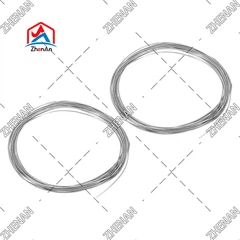
Pure tungsten is an extremely robust metal, with the highest tensile strength of all pure metals. While this can make it brittle under certain circumstances, when it comes to the process of metal fabrication, pure tungsten rigidity means that it can be drawn into very thin wires without fracturing.
Perhaps the most obvious example of this is tungsten's use in the context of light bulb filaments. In this particular application, extremely thin wires must be heated to extremely high temperatures, in order to emit light–and tungsten's high melting point is a crucial factor in allowing this to happen.


Why Choose us
Quality assurance
Zhenan operates a very strict quality control system, including raw material selection, production control, product inspection, fine packaging and delivery. All products undergo rigorous analysis and each order is inspected by relevant processes before shipment.
Professional service
With extensive experience in high-purity materials, we can help customers select materials, design products and provide technical support. We have independent laboratories to develop and test new materials and provide technical consultation to customers.
We Offer The Most Competitive Prices
Zhenan provides the most competitive prices for various products. We maintain close cooperation with industry leaders in China to obtain low-cost and high-quality materials. At the same time, we have established a complete supply chain system to reduce costs, and we always pursue efficient mass production and scientific management.
Pure Tungsten Chemical Properties
Pure tungsten is located in the transitional group of the chemistry periodic table and has oxidation states of + 2, + 3, + 4, + 5, and + 6. It has an atomic number of 74 and a relative atomic mass of 183.84. Pure tungsten is a solid at room temperatures because of a stable isometric crystal formation which can be seen under an x-ray.
Pure tungsten is very resistant to corrosion by acids and is only vulnerable to nitric acid and hydrofluoric acid. Also, it can be weakened by alkaline oxidizing melts like potassium nitrate or sodium hydroxide. Pure tungsten is very resistant to corrosion but will combine with oxygen readily at very high temperatures to produce trioxides.
Naturally, the metal is a mixture of 5 stable isotopes namely tungsten-180, tungsten-182, tungsten-183, tungsten-184, and tungsten-186 which have a percentage composition of 0.12%, 26.5%, 14.3%, 30.6% and 28.4% respectively.
Pure Tungsten Physical Properties
Pure tungsten in its purest form is a shiny white metal that can easily be processed. It does however contain traces of oxygen and carbon within its chemical composition and this makes it very brittle when put under tremendous stress and force.
Pure tungsten is the heaviest known engineering metal and has a very high density (19.25 g/cm³). This is due to its dense crystal formation. It has a very high melting point of 3 140°C and a boiling point high at 5 700°C. pure tungsten has the lowest vapor pressure of all metals and has the highest elasticity modulus of all metals at 400 GPa.
It also has a very low thermal expansion coefficient of 4.4×10⁻⁶mm°C which is about the same as that of borosilicate glass and this is why it is used for glass metal seals.Pure tungsten is also environmentally friendly and does not decompose or breakdown easily.

Production of Pure Tungsten
Pure tungsten is extracted and purified from its ore in several stages. The ore is eventually turned into tungsten (VI) oxide (WO3) which is then heated up with a hydrogen or carbon fuel to produce a powdered form of tungsten. The tungsten can not be molded into ingots because it has a very high melting point and melting is rather not commercially feasible.
The powdered tungsten is therefore prepared by mixing it with small amounts of nickel or other precious metals and it is sintered. During the sintering procedure the nickel diffuses and forms a tungsten alloy.
Tungsten can be extracted by hydrogen in the reduction of tungsten fluoride (WF6)
WF6 + 3H2 → W + 6HF
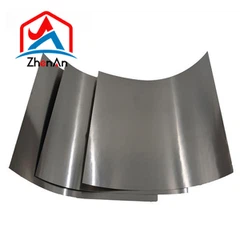
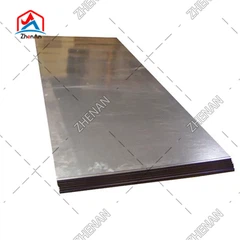
To manufacture pure tungsten products, the manufactures start by sintering and at times molding the created tungsten alloys into billets of solid blocks or bars. These billets are then fabricated into tungsten foils, tungsten bars, tungsten plates, or tungsten sheets. This is done by grounding, drawing, die cutting, or molding. Some of its products require further processing.
Most pure tungsten products are sold for usage in three different conditions namely black, a form which retains its coating of lubricant, and oxide. The other form is the cleaned form in which the coating has been removed with the use of various chemicals. Lastly there is ground form in which the metal has been fortified with diamond silicon carbide machinery to remove the coating and obtain a specific smoothness and a desired diameter.
Application of Pure Tungsten
Pure Tungsten Applications
The melting point of pure tungsten is the highest of all metal elements, the density is high, and is close to the gold, the hardness of tungsten is also very high, the hardness of tungsten carbide is close to diamond. In addition, tungsten also has good electrical conductivity and thermal conductivity, low coefficient, which is widely used in alloy, electronics, chemical industry.
Alloy field
The hardness of pure tungsten is very high and close to gold, so it can improve the strength, hardness, and wear resistance of the steel, is an important alloying element, is widely used in all kinds of steel production, common tungsten steel are high-speed steel, tungsten steel, and tungsten cobalt magnetic steel, the steel is mainly used in the manufacture of various tools such as drills, milling cutter, wire drawing die, die and mold, etc.
Tungsten carbide base hard alloy
Tungsten carbide has high wear resistance and refractory, its hardness is close to the diamond, which is often used in some hard alloy. At present, tungsten carbide base hard alloy is the largest consumption field of tungsten, the carbide is a powder metallurgy product that is made of tungsten carbide micron powder and metal binder (such as cobalt, nickel, molybdenum) in vacuum furnace or hydrogen reduction sintering furnace. Tungsten carbide base hard alloy is generally can be divided into four types such as tungsten carbide - cobalt - tungsten carbide, titanium carbide - cobalt - tungsten carbide, titanium carbide, tantalum carbide - cobalt, and steel bonded hard alloy, the tungsten carbide base hard alloy is mainly used in the manufacture of cutting tools, mining tools and wire drawing dies, etc.
Heat and wear-resistant alloys
Pure tungsten is the highest melting point of all metals, the hardness is very high, so it is often used to produce strong heat and wear-resistant alloy, for example, pure tungsten, cobalt, chromium, and carbon alloy used to produce high strength and wear-resistant parts such as aviation engine valve, turbine impeller, etc, pure tungsten and other refractory metals alloys are used to produce high strength parts such as air rocket engine nozzle.
High gravity alloy
Because pure tungsten has high density and high hardness, thus became the ideal material for making high proportion alloy. According to the composition, properties, and uses, the high proportion alloy is divided into W-Ni-Fe, W-Ni-Cu, W-Co, W-WC-Cu, W-Ag, and other major series, this alloy has many properties such as heavy, high strength, radiation absorption ability, thermal conductivity, and the thermal expansion coefficient, good conductive properties, weldability, and good processing, widely used in aerospace, aviation, military, oil drilling, electrical instrumentation, medical and other industries, such as manufacturing contact material balance hammer armor, fin, rudder, and control such as switch, circuit breaker, spot welding electrode, etc.
Electronic field
Pure tungsten is widely used in the electronics and power industry because of its high plasticity, low evaporation rate, high melting point, and high electron emission ability. For example, with the high light rate and long service life, so tungsten is widely used in the manufacture of various bulb filament, such as incandescent lamps, halogen lamps, tungsten wire can also be used in the manufacture of electronic tubes direct hot cathode, gate and a variety of electronic instruments by hot cathode heater. The properties of tungsten make it suitable for use in TIG welding and other similar materials.
Chemical field
The compound of pure tungsten is used as catalyst, and inorganic color, such as the two tungsten sulfide used as lubricant and catalyst in the synthesis of gasoline, tungsten oxide was used in painting, calcium or magnesium tungsten was used in fluorescent powder.
Other fields
Because its thermal expansion is similar to that of borosilicate glass, it is used to make glass or metal seals. The sensitivity of tungsten is low, so it is used to produce high purity tungsten jewelry. In addition, tungsten was also used in radioactive medicine, some instruments will also use tungsten wire.
Zhenan New Metal Co., Ltd. has always focused on the research and development, production and sales of metal materials. Our factory covers an area of 30,000 square meters and has a full set of modern production equipment. It has two large-scale metal production plants and a metal material testing center. The quality of the metal materials produced is trustworthy.


Our Certificate


Asked Questions
We're professional pure tungsten manufacturers and suppliers in China, specialized in providing high quality customized service. We warmly welcome you to buy pure tungsten at competitive price from our factory. Contact us for more details.
Tungsten Straight Wire, Metal Tungsten Round Pipe, Tungsten Stranded Wire