





Cobalt Metal
Your Professional Cobalt Metal Supplier
ZhenAn New Metal Co., Ltd. is located in Anyang City, Henan Province, the hometown of Oracle in China. We are a professional metal materials exporter with more than 30 years of experience in metal production.In addition, we also have 200+ employees and 2 production plants, each covering an area of more than 30,000 square meters. The annual output of metal materials exceeds 150,000 tons, including: tantalum metal, zirconium metal and niobium metal.


Why choose us
Quality assurance
Zhenan operates a very strict quality control system, including raw material selection, production control, product inspection, fine packaging and delivery. All products undergo rigorous analysis and each order is inspected by relevant processes before shipment.
Professional service
With extensive experience in high-purity materials, we can help customers select materials, design products and provide technical support. We have independent laboratories to develop and test new materials and provide technical consultation to customers.
Customized services
Which can accept your customized needs for product packaging and logistics. If you need to customize your own logo on the packaging, no problem, we can fully meet your needs.
Electrolytic Cobalt
Electrolytic cobalt is a high-purity form of cobalt metal produced via electrolysis, a hydrometallurgical process. It involves dissolving cobalt ore (e.g., cobalt sulfate or chloride) in an aqueous solution, purifying it to remove impurities (e.g., iron, copper), and passing an electric current through the solution. Cobalt ions (Co²⁺) are reduced at the cathode (negative electrode), depositing as solid cobalt metal. This method yields cobalt with >99.8% purity, used in electronics (e.g., magnetic alloys), catalysts, and as a feedstock for superalloys or battery materials.
|
Cobalt Metal Properties (Theoretical) |
|
|
Molecular Weight |
58.93 |
|
Appearance |
Gray metallic solid |
|
Melting Point |
1495 °C |
|
Boiling Point |
2870 °C |
|
Density |
8.9 g/cm3 |
|
Solubility in H2O |
N/A |
|
Poisson's Ratio |
0.31 |
|
Young's Modulus |
209 GPa |
|
Vickers Hardness |
1043 MPa |
|
Tensile Strength |
N/A |
|
Thermal Conductivity |
100 W ·m-1 ·K-1 |
|
Thermal Expansion |
(25 °C) 13.0 µm·m-1·K-1 |
|
Electrical Resistivity |
62.4 nΩ ·m |
|
Electronegativity |
1.8 Paulings |
|
Specific Heat |
0.109 Cal/g/K @ 25 °C |
|
Heat of Fusion |
16.06 kJ ·mol-1 |
|
Heat of Vaporization |
377 kJ ·mol-1 |

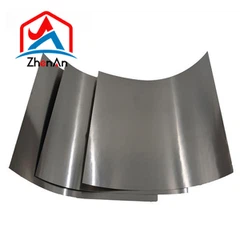
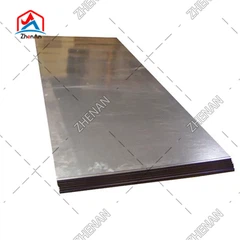
Appearance: Electrolytic cobalt typically appears silver-gray or steel-gray with a metallic luster.
Physical Properties: Hard but brittle, it is ferromagnetic, losing its magnetism when heated to 1150°C. Its melting point is 1495°C, boiling point is 2870°C, and density is 8.92 g/cm³.
Chemical Properties: It is inert to water at room temperature and stable even in humid air. However, when heated above 300°C in air, it oxidizes to form CoO, which burns to form Co₃O₄ when heated white hot. Fine metallic cobalt powder produced by hydrogen reduction can spontaneously combust in air to form cobalt oxide.
Purity: Electrolytic cobalt typically has a purity of over 99.8%, offering advantages such as high purity, good ductility, excellent magnetic properties, corrosion resistance, and excellent electrical conductivity.
Advantages of Electrolytic Cobalt Metal Flakes
High Purity
Purity up to 99.9%: Electrolytic cobalt flakes are produced by electrolysis, ensuring extremely high purity, suitable for applications with strict material requirements, such as batteries and alloys.
Excellent Conductivity
Good conductivity: The conductive properties of cobalt make it suitable for batteries and electronic components, and can effectively improve electrochemical performance.
Good Corrosion Resistance
Chemical stability: Electrolytic cobalt flakes show good corrosion resistance in a variety of chemical environments and are suitable for applications under harsh conditions.
Excellent Mechanical Properties
Hardness and toughness: Cobalt materials are hard and have good wear resistance, suitable for high-strength alloys.
Thermal Stability
Good high-temperature performance: Electrolytic cobalt flakes can still maintain their physical and chemical properties at high temperatures, suitable for high-temperature applications.
Magnetic Properties
The basis of magnetic materials: Cobalt has good magnetic properties and can be used to manufacture high-performance permanent magnetic materials.
Type of Electrolytic Cobalt
Flake Electrolytic Cobalt
Uniform thickness (typically 0.1-1mm), smooth surface, and easy cutting and processing. Primarily used in the manufacture of cobalt-based alloys and carbide blades.
Granular Electrolytic Cobalt
Uniform particle size distribution (e.g., -100 mesh), good fluidity, and easy direct pressing and molding. Used in the production of cobalt powder and magnetic materials (such as samarium cobalt permanent magnets).
Foil Electrolytic Cobalt
Extremely thin (<0.05mm), flexible, and can be bent or folded. Primarily used in battery current collectors and flexible electronic devices.
Battery Manufacturing: Electrolytic cobalt is used as the positive electrode material for nickel-metal hydride batteries, lithium-ion batteries, and manganese batteries, and is a significant demand source in the battery industry.
Alloy Production: Metallic cobalt is primarily used to make alloys. For example, cobalt-based alloys are a general term for alloys made from cobalt and one or more of the following: chromium, tungsten, iron, and nickel. Tool steel containing cobalt significantly improves the wear resistance and cutting performance of steel. Stellite carbide, which contains over 50% cobalt, retains its hardness even when heated to 1000°C, making it a key material for gold-containing cutting tools and aluminum intermetallics.
Chemical Industry: Electrolytic cobalt also has important applications in chemical synthesis, such as as a catalyst and in specific chemical reactions.
Other Industries: Electrolytic cobalt is also used in the manufacture of precision instruments, cemented carbides, welding products, and nickel- and cobalt-based alloys in aerospace technology.

Craftsmanship of Electrolytic Cobalt
Raw Material Preparation and Leaching
★Raw Material Sources
The raw materials for domestic electrolytic cobalt production are primarily copper and nickel smelting byproducts, such as cobalt slag from nickel electrolytic purification and cobalt-containing pyrite cinders. The cobalt content in cobalt slag is typically 6%-7%, requiring leaching to convert it into soluble cobalt salts.
★Leaching Methods
Sulfuric Acid Leaching: Cobalt slag is mixed with sulfuric acid and reacted at 65-75°C, with the cobalt entering the solution as cobalt sulfate.
Hydrochloric Acid Leaching: More effective for insoluble cobalt compounds, forming a cobalt chloride solution.
Pressure Acid Leaching: For difficult-to-process ores, high temperature and pressure are used to increase the cobalt leaching rate.
Ammonia Leaching: Suitable for cobalt-containing nickel ores, where cobalt forms a complex with ammonia for initial separation.
Solution Purification and Impurity Removal
★Iron Removal
Sodium Ferroalcohol Method: Sodium sulfate is added, the pH is controlled at 1.5-1.7, and the temperature is ≥90°C. This forms an insoluble sodium ferroalcohol precipitate, achieving an iron removal rate of 99%. Oxidative hydrolysis: Add NaClO₃ to oxidize Fe²⁺ to Fe³⁺, which then hydrolyzes to form a Fe(OH)₃ precipitate.
★Copper Removal
Sulfidation Precipitation: Add Na₂S to form a CuS precipitate, reducing the copper content to ≤0.003 g/L.
Lead and Zinc Removal
Extraction: Use extractants such as P204 and P507 to selectively separate lead and zinc.
★Deep Purification
Extraction Separation of Nickel and Cobalt: Use extractants such as N235 and D330 to separate nickel and cobalt, producing a cobalt chloride solution containing 75 g/L of cobalt.
Key Parameters: The purified solution must meet the following requirements: Co > 100 g/L, Fe < 0.001 g/L, Cu ≤ 0.003 g/L, and Pb ≤ 0.0003 g/L.
Electrolytic Refining
Electrolyte Preparation: Add sulfuric acid and boric acid to the purified cobalt chloride solution to adjust the concentration and pH to meet electrolysis requirements. Anode and Cathode Materials
Soluble Anode Method: A crude cobalt anode plate (cobalt content >95%) is used as the anode. Cobalt ions are replenished by dissolution of the anode during electrolysis.
Insoluble Anode Method: A lead-based alloy anode is used, and cobalt ions are replenished via an external solution.
Cathode: Stainless steel or titanium plates are typically used as cathodes.
★Electrolysis Conditions
Temperature: 55-65°C (soluble anode method) or 60°C (insoluble anode method).
Current Density: 300-400 A/m² (soluble anode method) or 400 A/m² (insoluble anode method).
Cell Voltage: 1.6-2.2 V (soluble anode method) or 3-4 V (insoluble anode method).
Electrolysis Cycle: The cathode cycle is typically 3 days. Electrolysis Reaction
Anodic reaction:4OH −−4e −→O 2↑ + 2H 2O (soluble anode method) or Co − 2e − → Co 2+ (insoluble anode method).
Cathode reaction: Co 2 + 2e − → Co (main reaction), 2H + + 2e − → H 2↑ (side reaction)
Innovative Process: Double-membrane three-chamber electrolysis uses a cation exchange membrane to isolate chloride ions, preventing chlorine gas production. Hydrochloric acid in the middle compartment maintains pH stability and improves current efficiency.
Post-Processing
★Washing and Drying
The electrolytic cobalt plates are washed with deionized water to remove the surface electrolyte and then dried at 100-150°C.
★Packaging and Storage
The dried electrolytic cobalt is packaged according to specifications, typically in flake or granular form, with a purity exceeding 99.98%.
FAQ
We're professional cobalt metal manufacturers and suppliers in China, specialized in providing high quality customized service. We warmly welcome you to buy cobalt metal at competitive price from our factory. Contact us for more details.
specialty metals consultants