





Tantalum Alloy
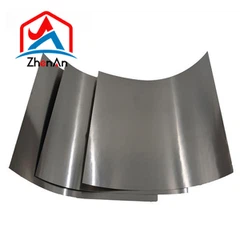
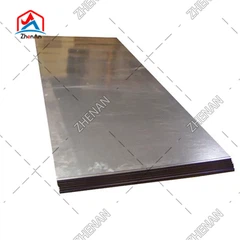
Tantalum–tungsten alloys are in the refractory metals group that maintain useful physical and chemical properties even at high temperatures. The tantalum alloys are characterized by their high melting point and the tension resistance.
Benefits of Tantalum Alloy
Tantalum alloy corrosion resistance
Tantalum alloy is a sensible choice whenever high corrosion resistance is required. This platinum-gray-colored metal has a density of 16.6 g/cm3 which is twice as dense as steel. We use our "unyielding" material, for example, to produce heat exchangers for the equipment construction sector, charge carriers for furnace construction, implants for medical technology, and capacitor components for the electronics industry. Tantalum's corrosion resistance makes it a valuable material in a large number of chemical applications.
Tantalum alloy excellent thermal and electrical conductor properties
Also, it is highly ductile at high temperatures, very hard, and has excellent thermal and electrical conductor properties. Its melting point of 2,996°C is the fourth highest of all metals. Even though tantalum alloy is not one of the noble metals, it is comparable to them in terms of chemical resistance. In addition, tantalum is very easy to work at well below room temperature despite its body-centered cubic crystal structure.


Why Choose us
Quality assurance
Zhenan operates a very strict quality control system, including raw material selection, production control, product inspection, fine packaging and delivery. All products undergo rigorous analysis and each order is inspected by relevant processes before shipment.
Professional service
With extensive experience in high-purity materials, we can help customers select materials, design products and provide technical support. We have independent laboratories to develop and test new materials and provide technical consultation to customers.
We Offer The Most Competitive Prices
Zhenan provides the most competitive prices for various products. We maintain close cooperation with industry leaders in China to obtain low-cost and high-quality materials. At the same time, we have established a complete supply chain system to reduce costs, and we always pursue efficient mass production and scientific management.
What Are the Applications of Tantalum Alloy?
Tantalum pentoxide (and other oxides) serve as highly stable and robust electrolyte coatings for the sintered tantalum alloy anode in capacitors. The use of tantalum alloy allows greater capacitance in smaller packages, offsetting the raw material's high cost.
In semiconductors, metallic tantalum plays a critical role in that a layer of a few atoms is sputter-coated onto a silicon wafer to chemically isolate the copper conductors which would otherwise diffuse progressively into the wafer. Lithium tantalate crystals are used as surface acoustic wave filters in audio circuits, to improve signal quality by improving electronic signal wave damping and frequency control.
Tantalum alloy has a very high melting point, in excess of 3,000 °C. Tantalum and its alloys find application wherever a metal component suffers exposure to extreme temperatures and must maintain low reactivity, high strength, and dimensional stability. This can be in gas turbine and rocket combustion chambers, reaction vessels, nuclear reactor containment structures, and a wide range of scientific, metallurgical, and research applications.
A range of alloys use tantalum alloy as a component, benefiting from enhanced properties gained from the blend. For example, tantalum-tungsten alloys in varying component proportions possess high-temperature strength and improved ductility compared with pure tungsten. These alloys are often used in high-temperature applications such as jet engines and rocket nozzles. Tantalum alloys (or superalloys), on the other hand, are ideal for chemical processing equipment that comes into contact with highly corrosive environments/reactions. They are also used in the manufacture of sputtering targets for thin-film deposition in the semiconductor industry. Meanwhile, tantalum alloys have exceptional high-temperature mechanical properties. They are suitable for applications in which highly loaded components experience periodic or long-term extreme temperatures, such as in the aerospace engine and nuclear sectors. Finally, tantalum alloys are widely used because of their resistance to extremely acidic and alkaline environments in chemical processing equipment and similarly aggressive environments.
Tantalum alloy and many of its alloys are ideally suited to operation in corrosive and elevated temperature/pressure environments as the range of reactive sensitivities is limited and alloys can be selected appropriately. The only vulnerability of tantalum alloy is in fluoride-based reactive chemistries such as hydrofluoric acid.
The extremely low to zero reactivity of tantalum alloy and many of its alloys makes them ideal for surgical implants, in which no sensitization and biocompatibility issues arise.
How to Choose Between Tantalum Metal and Tantalum Alloys
Overview of Tantalum Metal: Features and Applications
Tantalum metal is known for its unique attributes, which make it highly valuable in various industries. This rare, blue-gray transition metal boasts a high melting point and exceptional corrosion resistance, making it an excellent choice for creating components for electronics, aerospace, and medical devices. Tantalum is used in capacitors, which allow electronic devices to store electrical energy. Additionally, it can be found in alloys, coatings, and superconductors that are used in high-tech industries. Its biocompatibility also makes it an ideal material for medical implants, as it is resistant to bodily fluids and does not cause an immune response. Overall, tantalum metal has many features that make it a sought-after material in various sectors.
How Do Tantalum Alloys Enhance Tantalum's Properties?
Tantalum alloys are a powerful combination of metals that significantly enhance tantalum's properties. Tantalum is known for its remarkable resistance to corrosion and high melting point, making it a popular material for a broad range of applications. However, when combined with tungsten, tantalum's properties are further amplified. Tungsten is known for its extreme hardness and high density, making it an ideal partner to tantalum's strengths. Together, these metals create a formidable alloy that can withstand even the harshest environments, making it an essential material for industries such as aerospace and medical technology.
Side-by-Side Comparison: Tantalum Metal vs Tantalum Alloys
When it comes to the world of metals, Tantalum is a true standout. But which is better: pure Tantalum Metal or Tantalum Tungsten alloys? While both materials share many similarities, including high melting points and exceptional corrosion resistance, each has unique characteristics that set it apart from the other. Pure Tantalum Metal, for instance, boasts superior ductility and is excellent at enhancing electrical conductivity. In contrast, Tantalum Tungsten alloys offer greater strength and durability, making them perfect for high-stress environments. Ultimately, the choice between the two comes down to the specific needs of the application. Whether you're seeking strength or conductivity, either pure Tantalum Metal or Tantalum Tungsten alloys will provide the quality and reliability that this remarkable metal is known for.
Rebum aliquayam dolor ipsum stet est mangna sea eirmod. Invidunt ipsum justo rebum erat rebum et. Labore labore amet vero et est. Accusam sit justo. Vero rebum tempor dolore et est kasd. Justo diam no lorem no, duo aliquyam diam sea accusam slitr. Accusam magna clita dolor dolor, dolor at dolor accusam dolores elitr justo dolor accusam nonumy. magna dolor magna eirmod
Tantalum alloy has several unique characteristics that have led to its increased use in the 21st century. It is a highly stable metal that is almost immune to chemical degradation at temperatures lower than 302 °F (159 °C). In addition, it exhibits high levels of corrosion resistance when it comes into contact with air and moisture.
Like most metals, tantalum forms a thin but dense protective oxide layer (Ta2O5) when exposed to the atmosphere. This oxide layer firmly adheres to the surface of the metal, acting as a barrier which protects the underlying metal from further corrosion.
Tantalum alloy belongs to a class of metals known as refractory metals, which are defined by their strong resistance to heat and wear. It has a melting point of 5,463 °F (2,996 °C), the fourth highest of all metals.
In terms of mechanical properties, tantalum alloy is highly ductile, making it suitable for processes such as bending, stamping, and pressing. When combined with other metals, it can produce alloys with enhanced strength and higher melting points.

Element Category – Transition Metals
Phase – Solid
Symbol – Ta
Number – 73
STD Atomic Weight – 180.94788
Crystal Structure – Body Centered Cubic
Melting Temperature – 5463° F, 3017° C, 3290 K
Boiling Temperature – 9856° F, 5458° C, 5731 K
Electrical Resistivity – 20° C, 131 nΩ·m
Thermal Conductivity – 300 K, 57.5 W·m−1·K−1
Thermal Expansion – 25°C, 6.3 µm·m−1·K−1
Standard Specifications
Tantalum Ingot – ASTM B364
Tantalum Rod and Wire – ASTM B365
Tantalum Tubing – ASTM B521
Tantalum Sheet, Plate, Strip and Foil – ASTM B708
Medical Grade Tantalum – ASTM F560


Common Tantalum Alloys (UNS Codes)
Unalloyed Tantalum (EB Melted) – R005200
Unalloyed Tantalum (Powder Metallurgy Grade) – R05400
Tantalum 2.5% Tungsten – R05252
Tantalum 10% Tungsten – R05255
Tantalum 7.5% Tungsten – Spring Grade
Grain Stabilized – Furnace Grain
Commercial Grade ASTM Tantalum Purities
99.5% Pure 3N5
99.9% Pure 4N
99.995% Pure 4N5
99.999% Pure 5N
Tantalum Alloy Selection Guide: Key Factors to Consider When Specifying Metals for Manufacturing
Physical properties
This is a crucial factor in determining the appropriate tantalum alloy for your application because there are so many different things to look at. If you are looking for something that may be exposed to water, we would want to consider an tantalum alloy with excellent corrosion resistance. Other applications may bring things like thermal, electrical and magnetic properties into play. If the end use of a product is within the aerospace field, it may be worth looking at how the tantalum alloy operates under high and low temperatures, so a tantalum alloy may be the best option. If it is a consumer product, aesthetic appeal could be more important, so it will be worth looking at the different finish options.
Mechanical properties
Another factor that always needs to be looked at, mechanical properties of an tantalum alloy can vary greatly depending on both its content and how it was processed. Strength (tensile and yield), ductility, hardness and toughness are all often looked at within the umbrella of mechanical properties. Some applications are better off with harder material while some, maybe they require a lot of forming, need softer material. This can all be controlled during the rolling and annealing processes. Working closely with a stainless steel and special metals precision reroller with engineering and metallurgy teams on staff are a helpful resource for getting your desired tantalum alloy's mechanical properties right for your needs.
Cost
This can often be a key prohibitive factor in the tantalum alloy selection process. It is important however, within cost, to explain why things are priced the way they are. Different alloys have different elemental content, are processed in various ways and must be processed differently. By this I mean, a certain alloy might be cheaper as a raw material, but if its' lifespan is 1/3 the lifespan of an alternative option, is it really worth it? Will money or time be saved in the long run by going with more expensive but also more suitable/qualified option. These are a few questions to consider when weighing cost as a long-term factor.
Service
This factor in tantalum alloy selection plays into some of what was mentioned in the Cost Section. Meaning, what will the maintenance be like on your application because of the alloy you selected? In most scenarios there are some type of outside factors such as temperature or other environmental concerns that may affect how long a product will last before it must be serviced. Choosing the best possible alloy for your product should extend the time between servicing or just extend the lifespan. We can look in depth at this and determine if it makes more sense to select an alloy that will be serviced a lot and is easier to process up front or a specialty metal that will need little to no service.
Fabrication
Manufacturing and producing this part is where we need to look at the appropriate fabrication selection. Maybe your part needs to be deep drawn and we should take a look at an tantalum alloy with higher Nickel content, such as 305 Stainless Steel. In other scenarios a part may need to be stretch formed or welded and we could recommend an appropriate alloy for that, such as 316L stainless steel in strip or wire. 316L has resistance to intergranular corrosion following the welding process.
Surface finish & surface properties
A lot of different characteristics can fall under this category and all are important to making tantalum alloy selection that makes sense for your process and part. Different end uses for a part will make a manufacturer value different types of surface properties such as the appearance, abrasion, and a coating or the finish.
Zhenan New Metal Co., Ltd. has always focused on the research and development, production and sales of metal materials. Our factory covers an area of 30,000 square meters and has a full set of modern production equipment. It has two large-scale metal production plants and a metal material testing center. The quality of the metal materials produced is trustworthy.


Our Certificate


Asked Questions
We're professional tantalum alloy manufacturers and suppliers in China, specialized in providing high quality customized service. We warmly welcome you to buy tantalum alloy at competitive price from our factory. Contact us for more details.
Tantalum Tungsten Alloy Foil, Ta W Alloy Plate, Tantalum Tungsten Alloy Sheet