





Molybdenum Metal
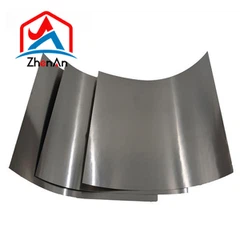
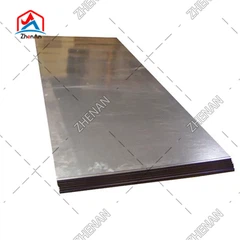
Molybdenum metal is a silvery-white metal that is ductile and highly resistant to corrosion. It has one of the highest melting points of all pure elements — only the elements tantalum and tungsten have higher melting points. Molybdenum is also a micronutrient essential for life.
Benefits of Molybdenum Metal
High Meeting Point:
Molybdenum metal has one of the highest melting points of all metals, making it suitable for high-temperature applications.
High Strength and Hardness:
Molybdenum metal has excellent tensile strength and hardness, making it ideal for use in components that require strength and durability.
Low Coefficient of Thermal Expansion:
Molybdenum metal has a lower coefficient of thermal expansion than most metals, which helps to maintain its shape and integrity at high temperatures.
Good Electrical and Thermal Conductivity:
Molybdenum metal is an excellent conductor of heat and electricity and is often used in electronic components such as transistors and diodes.


Why Choose us
Quality assurance
Zhenan operates a very strict quality control system, including raw material selection, production control, product inspection, fine packaging and delivery. All products undergo rigorous analysis and each order is inspected by relevant processes before shipment.
Professional service
With extensive experience in high-purity materials, we can help customers select materials, design products and provide technical support. We have independent laboratories to develop and test new materials and provide technical consultation to customers.
We Offer The Most Competitive Prices
Zhenan provides the most competitive prices for various products. We maintain close cooperation with industry leaders in China to obtain low-cost and high-quality materials. At the same time, we have established a complete supply chain system to reduce costs, and we always pursue efficient mass production and scientific management.
Molybdenum metal (Mo) is the 42nd element on the periodic table. It is a silvery metal and has the sixth highest melting point of any elements, demonstrating its potential uses in construction and metals.
Molybdenum was discovered by Carl Welhelm Scheele, a Swedish chemist, in 1778 in a mineral known as molybdenite (MoS2) which had been confused as a lead compound. Molybdenum was isolated by Peter Jacob Hjelm in 1781. Today, most molybdenum is obtained from molybdenite, wulfenite (PbMoO4) and powellite (CaMoO4). These ores typically occur in conjunction with ores of tin and tungsten. Molybdenum is also obtained as a byproduct of mining and processing tungsten and copper.
There was no viable use of molybdenum metal for over a century. This was due to its scarcity and difficulty in acquiring and extracting the pure element. Early molybdenum steel alloys showed great promise in their increased hardness, but efforts to manufacture them on a large scale were hampered by inconsistent results and a tendency toward brittleness and recrystallization. In 1913, Frank E. Elmore developed a flotation process to recover molybdenite from ores; flotation remains the primary isolation process today.
It started to become useful during war times where its strength to weight ratio far exceeded anything else on the market. During World War One, demand for Molybdenum increased dramatically. Molybdenum was used as armor plating for tanks (up to 3” thick molybdenum sheet) and other military vehicles and also as a substitute for tungsten in high speed steels. After the war, its demand dropped and it wasn't until World War Two where it again played another important role. But the use of molybdenum has expanded to various new uses as technology has developed and it now plays a critical role in construction and even in agriculture.
Molybdenum disulphide (MoS2), one of molybdenum's compounds, is used as a high temperature lubricant. Molybdenum trioxide (MoO3), another molybdenum compound, is used to adhere enamels to metals. Other molybdenum compounds include: molybdic acid (H2MoO4), molybdenum hexafluoride (MoF6) and molybdenum phosphide (MoP2).
Factoring in its use in construction steel, tool and high-speed steel and in cast iron, more than 50% of Molybdenum is used in the manufacturing of Molybdenum grade alloy steel and iron. Within the chemical component of molybdenum's use, it is commonly used as a smoke suppressant and as mentioned, lubricants where it performs exceptionally well in comparison to other lubricants. Use of molybdenum is also important in agriculture. Molybdenum is an important trace element for plants and animals and is an essentially component of enzyme nitro-genase which helps converts atmospheric nitrogen into ammonia. It is especially useful in the growing of cauliflower.
Molybdenum is primarily used as an alloying agent in steel. When added to steel in concentrations between 0.25% and 8%, molybdenum forms ultra-high strength steels that can withstand pressures up to 300,000 pounds per square inch. Molybdenum also improves the strength of steel at high temperatures. When alloyed with nickel, molybdenum forms heat and corrosion resistant materials used in the chemical industry.
Application of Molybdenum Metal
Vacuum Furnace Component
Molybdenum metal strength and chemical stability make it ideally suited for work in high-temperature, high-pressure conditions. It is easier and cheaper to fabricate than other refractory metals such as tantalum and tungsten. Moreover, its vapor pressure is well above the range of temperatures created in many vacuum furnaces—often lower than 1,500°C.
The vacuum or high temperature furnace parts made of molybdenum include but are not limited to the following types:
● Crucibles: Spun Mo crucible–Sintered Mo crucible–Plated worked Mo crucible–Forged Mo crucible–Welded Mo crucible
● Charge Carriers, Boats: Mo frame–Mo annealing boat–Mo tray–Mo carrier–Mo-La sintering tray
● Shieldings: Mo shielding – Mo-La shielding – W & Mo composite shielding
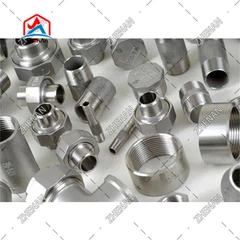
● Fastener: Molybdenum metal washer – Molybdenum nuts
● Silicon Furnaces: Mo flow guiding cylinder – Mo counterweight – Mo hook


Metal Hot Zone
Molybdenum metal is often used in heat resisting and insulating parts in all-metal hot zones of vacuum furnaces with temperatures up to 1500°C. Heat treatments for some materials demand extremely clean, high-pressure environments; molybdenum's purity and stability effectively resist or eliminate carbon and oxygen contamination. Molybdenum metal hot zones include, but are not limited to:
● Heating Chamber
● Annealing Furnace
● Diffusion Welding Furnace
● Hot Zone for KY
Semiconductor Manufacturing
In semiconductor manufacturing, ion implantation is done at high temperatures in erosive chambers filled with reactive gases and magnetic fields. In such situations, molybdenum alloy components resist reaction with dopant gases and plasma erosion. Molybdenum ensures the dopant atoms are precisely created and implanted onto the silicon wafer. Molybdenum ion-source components result in lower cleaning and maintenance costs.
Many molybdenum-based semiconductor and electronic components including, but not limited to:
● Ion Source Of Ion Implantation Equipment: Ion source–Face plate–End plate- Filament clamp–Filament–Repeller mod–Arc chamber
● Waveguide Components
● LED And Electronic Packaging Heat Sink: Molybdenum wafer substrate for LED chip–MoCu heat spreader–CMC laminate heat sink
Glass Melting Electrode
Molybdenum metal is an ideal metal for use in melting electrodes. Electrodes used in glass melting, for example, must withstand aggressive, high-temperature processing environments. Molybdenum electrodes' slow erosion rate and high creep resistance in molten glass ensure negligible damage from chemical and dimensional instability. In addition, molybdenum's high electrical conductivity ensures high energy input and productivity when current passes through the electrodes.
Molybdenum Thin Film
Molybdenum thin film is a superior component of TFT-LCD screens, solar cells and panels, touch panel displays and related technologies, due to its low coefficient of thermal expansion, high chemical and thermal stability, and excellent electrical conductivity.
For example, Molybdenum thin films are used to make gate, drain and source electrodes of thin film transistors. They produce a high conversion rate in solar power. Molybdenum foil also exhibits excellent thermal stability, heat resistance and radiation absorption capacity, making it ideally suited as a radiation shield and a core component of a collimator in CT equipment. Moreover, it can be used to make boats for vaporization deposition.

Molybdenum Metal Physical And Mechanical Properties
|
Molybdenum Metal Physical Properties |
Molybdenum Mechanical Properties |
||
|
Density |
0.369 lb/in3 |
Tensile Strength |
150 (1035) ksi (Mpa)-RT |
|
Melting Point |
4760 °F |
75 (515) ksi (Mpa)-500°C |
|
|
Thermal Conductivity |
0.35 cal/cm2/cm°C/sec |
25 (175) ksi (Mpa)-1000°C |
|
|
Specific Heat |
0.061 cal/gm/°C |
Elongation |
|
|
Thermal Expansion |
4.9 micro-in/°C x 10-6 |
Hardness |
230 dph |
|
Electrical Resistivity |
5.17 microohm-cm |
Modules of Elasticity |
45000 ksi |
|
Recrystalization Temp. |
1100 °C |
||
Molybdenum Metal Processing Skills
Molybdenum metal processing
Milling the mined ore through crushing and grinding
Ball or rod mills crush and grind the mined ore to fine particles, releasing molybdenite from the gangue (worthless rock).
Further ball milling reduces the material to the consistency of face powder.
Flotation
The milled ore/gangue powder is mixed with a liquid and aerated through air bubbles in the flotation step. The less dense ore rises in the froth to be collected, while the heavier gangue sinks to be discarded. Flotation separates the metallic minerals from the gangue this way and - in the case of copper/ molybdenum ores - separates molybdenite from copper sulfide.
The resulting MoS2 concentrate contains between 85 and 92% MoS2. Further treatment by acid leaching dissolves impurities like copper and lead, if necessary.
Roasting
Roasting in air at temperatures between 500 and 650°C converts MoS2 concentrate into roasted molybdenite (MoO3) concentrate (also known as technical mo oxide, or tech oxide) by the chemical reactions:
2MoS2 + 7O2 → 2MoO3 + 4SO2
MoS2 + 6MoO3 → 7MoO2 + 2SO2
2MoO2 + O2 → 2MoO3
Roasters are multi-level hearth furnaces, in which molybdenite concentrates move from top to bottom against a current of heated air and gases blown from the bottom. The image shows one of the levels in a typical roaster. Large rotary rakes move the molybdenite concentrate to promote the chemical reaction. Desulfurization systems such as sulfuric acid plants or lime scrubbers remove sulfur dioxide from the effluent roaster gases.
The resulting roasted molybdenite concentrate typically contains a minimum of 57% molybdenum, and less than 0.1% sulfur.
Rhenium recovery
Some of the by-product molybdenite concentrates from copper mines contain small quantities (<0.10%) of rhenium. Molybdenum roasters equipped to recover rhenium are one of the principal commercial sources for this rare metal.
Smelting Ferromolybdenum
Between 30 and 40% of technical Mo oxide production is further processed into ferromolybdenum (FeMo). The oxide is mixed with iron oxide and reduced by aluminum in a thermite reaction, producing a ferromolybdenum ingot weighing several hundred kilograms. The product contains between 60 and 75% molybdenum, and the balance is essentially iron. After air cooling, the ingot is crushed and screened to meet specified ferromolybdenum particle size ranges.
Chemical production from technical Mo oxide
About 20% of the roasted molybdenite concentrate produced worldwide is processed into a number of chemical products. Upgrading is performed:
By sublimation to produce pure molybdic oxide (MoO3)
By wet chemical processes to produce a wide range of pure molybdenum chemicals (mainly molybdic oxides and molybdates)
The latter involves dissolution of the roasted concentrate in an alkaline medium (ammonium or sodium hydroxide), followed by the removal of impurities by precipitation and filtration and/or solvent extraction. The resulting ammonium molybdate solution is then converted to any one of a number of molybdate products by crystallization or acid precipitation. These can be further processed by calcination to pure molybdenum trioxide.
Molybdenum metal production
Molybdenum metal is produced by hydrogen reduction of pure molybdic oxide or ammonium molybdate.
The chemical reduction of pure molybdenum trioxide or ammonium dimolybdate to metal requires two stages because conversion directly to metal releases heat that inhibits the process.
The first stage of reduction to MoO2 is done in temperatures ranging from 450-650°C. The second stage, where molybdenum dioxide is reduced to molybdenum metal is done in temperatures ranging from 1,000-1,100°C. Historically, both stages were carried out by pushing “boats” loaded with powder through tube furnaces containing a flowing hydrogen atmosphere.
Rotary furnaces, where powder is fed continuously through a rotating inclined tube in a flowing hydrogen atmosphere, are used at some operations, mainly in Asia, in first stage reduction operations, where they provide increased production efficiencies.
Zhenan New Metal Co., Ltd. has always focused on the research and development, production and sales of metal materials. Our factory covers an area of 30,000 square meters and has a full set of modern production equipment. It has two large-scale metal production plants and a metal material testing center. The quality of the metal materials produced is trustworthy.


Our Certificate


Asked Questions
We're professional molybdenum metal manufacturers and suppliers in China, specialized in providing high quality customized service. We warmly welcome you to buy molybdenum metal at competitive price from our factory. Contact us for more details.