





Niobium Metal
Niobium metal is a chemical element; it has symbol Nb (formerly columbium, Cb) and atomic number 41. It is a light grey, crystalline, and ductile transition metal. Pure niobium has a Mohs hardness rating similar to pure titanium, and it has similar ductility to iron. Niobium oxidizes in Earth's atmosphere very slowly, hence its application in jewelry as a hypoallergenic alternative to nickel. Niobium is often found in the minerals pyrochlore and columbite, hence the former name "columbium".
Benefits of Niobium Metal
Ductility and Malleability: Niobium metal is highly ductile and malleable. This means it can be drawn into wire or hammered into thin sheets, a property essential for manufacturing and engineering applications.
High Melting Point: With a melting point of about 2,468 degrees Celsius (4,474 degrees Fahrenheit), niobium metal can withstand extreme temperatures, making it ideal for use in high-temperature engineering applications.
Corrosion Resistance: Niobium metal is exceptionally resistant to corrosion, which makes it useful in environments that would degrade or damage other materials.
Superconductivity: One of the most remarkable properties of niobium metal is its ability to become superconductive at cryogenic temperatures. When cooled below a certain temperature, it can conduct electricity with zero resistance, a property harnessed in various scientific and medical applications.


Why Choose us
Quality assurance
Zhenan operates a very strict quality control system, including raw material selection, production control, product inspection, fine packaging and delivery. All products undergo rigorous analysis and each order is inspected by relevant processes before shipment.
Professional service
With extensive experience in high-purity materials, we can help customers select materials, design products and provide technical support. We have independent laboratories to develop and test new materials and provide technical consultation to customers.
We Offer The Most Competitive Prices
Zhenan provides the most competitive prices for various products. We maintain close cooperation with industry leaders in China to obtain low-cost and high-quality materials. At the same time, we have established a complete supply chain system to reduce costs, and we always pursue efficient mass production and scientific management.
What are the Applications of Niobium Metal
Iron and steel industry
About 85% to 90% of niobium metal in the world is used for iron and steel production as a form of niobium iron. The steel can increase more than 30% of strength by adding 0.03% - 0.05% niobium. Niobium can induce precipitation and control cooling rate to achieve dispersion distribution of the precipitates, and adjust the toughness level of steel in a wide range. Therefore, the addition of niobium steel can not only enhance the strength of steel, but also can improve the high-temperature oxidation resistance and corrosion resistance of steel, reduce ductile brittle transition temperature of steel, the steel has good welding properties and formability.
Superconducting materials industry
Some niobium compounds and niobium metal have high superconducting transition temperature, which is widely used in the manufacture of various industrial superconductors, such as a superconducting generator, high power accelerator magnets, superconducting magnetic energy storage, magnetic resonance imaging equipment etc..
At present, the most important superconductor materials are NB Ti and Nb Sn, which are widely used in medical diagnosis of magnetic resonance imaging apparatus and nuclear magnetic resonance spectrometer for spectral line analysis.
Aerospace Industry
Aerospace industry is the main application area of high purity niobium, mainly used for manufacturing engines and heat resistant components rockets and spacecraft. NB - and Ta - based hot - alloys have excellent thermal and thermal resistance and processability, which are widely used in aircraft components and gas turbine blades. In the United States, almost all jet fighter engines are made of niobium alloy.
Atomic energy industry
Niobium metal has a high thermal conductivity, high melting point, good corrosion resistance, and low neutron capture cross section. It is a material that is well suited for atomic reactors. The major uses of niobium metal in the atomic energy industry include the inclusion of nuclear fuel, the alloys of nuclear fuels, and the structural materials of heat exchangers in nuclear reactors.
Electronic industry
Niobate ceramics can be used for the production of capacitors. Single crystal such as lithium niobate and potassium niobate compounds is a new type of Optoelectronics and electronics with good crystal, piezoelectric, pyroelectric and optical properties, has been widely applied to infrared, laser technology and electronic industry. In addition, niobium metal has high melting point, high emission electron capacity, and has the ability to attract air. It can be used to make electron tubes and other electronic vacuum devices.
Medical field
Niobium has anti - corrosive physiological and good biological compatibility, will not happen various liquid substances in the human body, and almost no damage to biological tissues, can adapt for any sterilization method, which are often used in the manufacture of bone plate, skull plate screw, plant root, surgical instruments etc..
Other applications
In the chemical industry, niobium metal is a high quality acid and liquid metal corrosion resistant material that can be used in cooking machines heaters and coolers. In addition, niobium acid is also an important catalyst.
Niobium metal has also been applied to the foundry industry, its main role is to form a hard carbide and change of graphite morphology and size, which are often used in the manufacture of automotive cylinder head, piston ring and brake etc.. In addition, niobium is sometimes used in commemorative coins with gold and silver.
Types of Niobium Metal
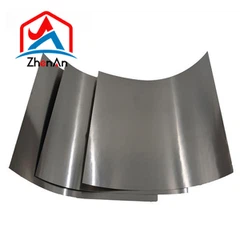
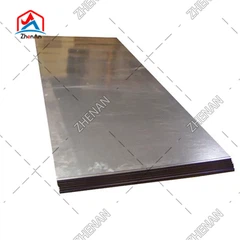
Niobium plates can be utilized in various high-tech applications spanning metallurgy, engineering and industry. Custom shapes, sizes and thicknesses can be manufactured to suit customers' requirements.
Niobium-titanium alloys for use in superconductors and particle accelerators, coin inserts, and dimensionally stable crucibles used for diamond growth can all be made using this process.
Niobium metal is an exceptional refractory metal with superior resistance to wear and heat. Furthermore, its melting point is high and exhibits excellent corrosion resistance properties.
Nb is an essential alloying element in high-strength low, alloy (HSLA) steels. It provides more effective strengthening agents than vanadium or titanium; only half as much Nb is needed to achieve the same increase in strength.
Niobium metal is a soft, grey transition metal with excellent alloying properties and widespread applications in high-tech equipment such as superconducting magnets and MRI scanners.
Niobium's low toxicity and iridescence make it ideal for jewellery and decorative applications, such as anodization. Anodization produces a controlled and repeatable range of colours which don't rust or tarnish and can easily be polished or buffed to achieve high-luster finishes.
It is produced through cold rolling procedures and chemically pure for various reactive applications. They are also available as coils that are utilized in semiconductor & electronic energy applications.
Niobium metal is a soft, grey transition metal similar to tantalum with properties close to tantalum that finds use across medical applications and steel production processes.
As part of its corrosion resistance and strength properties, titanium is often added to stainless steel for corrosion protection and strength enhancement. Furthermore, it serves as a flux in welding rods.
Niobium is also an ideal material for superconducting magnets used in MRI scanners due to its excellent flexibility and oxidation resistance, making it a suitable addition.
Niobium metal is a light grey, crystalline transition metal with high flexibility properties that make it suitable for electroplating jewellery designs and superconductivity applications. Additionally, this versatile metal has many industrial uses as it has been found in superconducting materials and applications.
Thermal neutron capture cross-section measurements are low, making this material suitable for nuclear applications such as those found in MRI scanner magnets.
Aluminum's high melting point and excellent corrosion resistance make it a desirable material for fabrication parts, and it can even be alloyed with nickel or iron to create superconducting materials.
Aluminium can also be an effective material for transmitting optical signals via surface-localized evanescent waves. It is a crucial choice in nanophotonics, providing an alternative to noble metals for optical transmission.
The metal takes on a bluish tinge when exposed to air at room temperature for extended periods.Despite a high melting point in elemental form (2,468 °C), it is less dense than other refractory metals. Furthermore, it is corrosion-resistant, exhibits superconductivity properties, and forms dielectric oxide layers.
Niobium metal is slightly less electropositive and more compact than its predecessor in the periodic table, zirconium, whereas it is virtually identical in size to the heavier tantalum atoms, as a result of the lanthanide contraction. As a result, niobium metal chemical properties are very similar to those for tantalum, which appears directly below niobium metal in the periodic table.Although its corrosion resistance is not as outstanding as that of tantalum, the lower price and greater availability make niobium metal attractive for less demanding applications, such as vat linings in chemical plants.

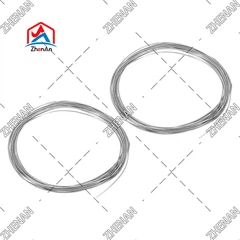
Processing Method Of Niobium Metal Wire
Niobium is a rare metal with excellent physical and chemical properties, and its wire is widely used in many high-tech fields. The processing methods of niobium wire mainly include melting, ingot casting, hot processing, cold processing and final molding. The following are the main steps of niobium processing:
Smelting and ingot casting
Smelting of niobium metal is usually carried out under vacuum or inert gas protection to prevent niobium from reacting with oxygen, nitrogen and hydrogen in the air. Common methods include electron beam melting and arc melting. After melting, the niobium liquid is poured into a mold to form an ingot.
Hot processing
The ingot undergoes a preliminary hot process, such as forging and rolling, into smaller billets. This process can improve the density and uniformity of niobium metal and improve its mechanical properties. Forging and rolling are usually carried out at high temperatures to reduce the hardness of the metal and increase its ductility.
Annealing
The niobium metal billet after hot processing needs to be annealed to eliminate the internal stress and restore the plasticity of the material. Annealing is usually carried out in a vacuum or inert atmosphere to prevent niobium oxidation.
Cold processing
Cold processing, including wire drawing and cold rolling, is the key step to further process the annealed niobium metal billet into fine wire. Cold processing needs to be carried out under strictly controlled conditions to ensure the dimensional accuracy and surface quality of niobium wire.
Wire Drawing
Wire drawing is the process of gradually stretching the coarse niobium rod into a fine wire through a series of gradually reducing the diameter of the mold. Each drawing is accompanied by the hardening of the material, so multiple anneals are required to maintain the machinability and malleability of niobium.
Cold Rolling
In some cases, niobium metal billets may need to undergo a cold rolling process, which involves passing the metal through a pair of rotating rollers to reduce its thickness and increase its length. Cold rolling is usually alternated with annealing to gradually process the niobium billet into the desired wire shape and size.
Surface treatment
In order to ensure the high purity and surface finish of the niobium metal wire, the finished niobium wire usually requires surface treatment. Common surface treatment methods include electrolytic polishing and chemical polishing. These methods can remove the oxides and impurities on the surface and improve the corrosion resistance and electrical conductivity of niobium wire.
Testing and packaging
Finally, niobium metal wire needs to undergo rigorous testing to ensure that its size, purity and mechanical properties meet the requirements. Qualified niobium wire is packaged according to customer requirements, usually in vacuum sealed or inert gas protective packaging to prevent oxidation during transportation and storage.
Niobium Metal Property Categories
Niobium metal is a lustrous, ductile metal. It features a high melting point (2,477° C), lower density than similar refractory metals, high corrosion resistance (but lower than tantalum), and good cold working properties.
Following is a summary of its properties:
Element Category — Transition Metals
Phase — Solid
Symbol — Nb
Number — 41
Density — 8.57 grams per cubic centimeter
STD Atomic Weight — 92.90638(2) g/mol
Crystal Structure — Body Centered Cubic
Melting Temperature — 2750 K, 2477° C, 4491° F
Boiling Point — 5017 K, 4744° C, 8571° F
Electrical Resistivity — (0 °C) 152 nΩ·m
Thermal Conductivity — (300 K) 53.7 W·m−1·K−1
Thermal Expansion — 7.3 µm/(m·K)
Zhenan New Metal Co., Ltd. has always focused on the research and development, production and sales of metal materials. Our factory covers an area of 30,000 square meters and has a full set of modern production equipment. It has two large-scale metal production plants and a metal material testing center. The quality of the metal materials produced is trustworthy.


Our Certificate


Asked Questions
We're professional niobium metal manufacturers and suppliers in China, specialized in providing high quality customized service. We warmly welcome you to buy niobium metal at competitive price from our factory. Contact us for more details.
Customized Niobium Wire, Pure Niobium Cup, Nb Round Bar