





Enameled Wire
Your Professional Enameled Wire Supplier
ZhenAn New Metal Co., Ltd. is located in Anyang City, Henan Province, the hometown of Oracle in China. We are a professional metal materials exporter with more than 30 years of experience in metal production.In addition, we also have 200+ employees and 2 production plants, each covering an area of more than 30,000 square meters. The annual output of metal materials exceeds 150,000 tons, including: tantalum metal, zirconium metal and niobium metal.


Why choose us
Quality assurance
Zhenan operates a very strict quality control system, including raw material selection, production control, product inspection, fine packaging and delivery. All products undergo rigorous analysis and each order is inspected by relevant processes before shipment.
Professional service
With extensive experience in high-purity materials, we can help customers select materials, design products and provide technical support. We have independent laboratories to develop and test new materials and provide technical consultation to customers.
Customized services
Which can accept your customized needs for product packaging and logistics. If you need to customize your own logo on the packaging, no problem, we can fully meet your needs.
Enameled Wire
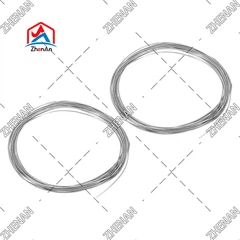
Enameled wires are copper or aluminium wires coated with a thin layer of enamel insulation. This insulation not only protects the wire but also provides electrical insulation. The enamel coating allows engineers to wind the wire tightly without the risk of short circuits, making it ideal for electromagnetic applications.
|
Enameled Type |
Polyester |
Modified Polyester |
Polyester-imide |
Polyamide-imide |
Polyester-imide /Polyamide-imide |
|
Insulation Type |
PEW/130 |
PEW(G)/155 |
EIW/180 |
EI/AIW/200 |
EIW(EI/AIW)220 |
|
Thermal class |
130, CLASS B |
155, CLASS F |
180, CLASS H |
200, CLASS C |
220, CLASS N |
|
Conductor |
CCA |
CCA |
CCA |
CCA |
CCA |
|
Size(mm) supply |
0.11-8.0 |
0.11-8.0 |
0.11-8.0 |
0.11-8.0 |
0.11-8.0 |
|
Enamel thickness |
Grade(0,1,2,3) |
Grade(0,1,2,3) |
Grade(0,1,2,3) |
Grade(0,1,2,3) |
Grade(0,1,2,3) |
|
Standard |
IEC60317-0-2 |
IEC60317-0-2 |
IEC60317-0-2 |
IEC60317-0-2 |
IEC60317-0-2 |
Key Benefits of Enameled Wires
High Electrical Conductivity
They are typically made from high-quality copper, known for their excellent electrical conductivity. This ensures minimal energy loss and efficient electrical transfer in various applications.
Thermal Resistance
Rational engineers appreciate their ability to withstand high temperatures. This property is crucial in applications where wires are exposed to heat, such as transformers and electric motors.
Chemical Resistance
They are also resistant to many chemicals, ensuring the longevity of the wire and the reliability of the system in which they are used.
Size Variability
They are available in a range of sizes and diameters, catering to the specific needs of different applications. Rational engineers can choose the wire that best fits their design requirements.
Polyurethane Enamel Type
Polyurethane Enamel Wire with code UEW and UEWF has Thermal Capacity of 120°C, 130°C and 155°C has diameter range from 0.08mm to 1.00mm and can be used in Transformers, Meters, Electronic and Communication Devices.
Polyester Enamel Type
This type of Enamel Wire with code PEW has Thermal Capacity of 155°C. The diameter range is 0.08mm to 1.6mm. Polyester Enamel wire can be used in Motors for Household Application and Appliances.
Polyester-imide
Polyester-imide Enamel Wire coded as EIW has Thermal Capacity of 180°C with diameter range from 0.1mm to 1mm. This type of enamel wire are used in High Power Motors.
Polyamide-imide
Polyamide-imide Enamel Wire has code AIW. The Thermal Capacity is 220°C with diameter range from 0.1mm to 1.6mm. This Enamel wire is used in Small Motors and Transformers.


Self-Bonding Polyurethane
Self-Bonding Polyurethane Enamel Wire with code SB UEW has Thermal Capacity of 130°C with diameter range from 0.08mm to 1.2mm used in Communication Apparatus and Small Motors.
Self-Bonding Polyester-imide
Self-Bonding Polyester-imide Enamel Wire with code SB EIW has Thermal Capacity of 180°C. The diameter range is 0.1mm to 0.8mm. Self-Bonding Polyester-imide is used in Magnetic Coils and Deflection York Application.
Polyurethane over coated with polyamide
This type of Enamel Wire with code UEW-NY and UEWF-NY has Thermal Capacity of 130°C and 155°C with diameter range from 0.08mm to 1.6mm used in Small Motors and Transformers.
Polyester overcoated with polyamide
Polyester overcoated with polyamide are coded as PEW-NY and PEWH-NY, has Thermal Capacity of 155°C and 180°C with diameter range from 0.1mm to 1.6mm. This Enamel Wire is used in Small Motors.
Polyester-imide overcoated with polyamide-imide
This type of Enamel Wire with code EIW-AI has Thermal Capacity of 200°C with diameter range from 0.1mm to 1.6mm used in Microwave oven Transformer and Air-con Motors.
Applications of Enameled Wires
Electric Motors
Enameled wires are essential in electric motors, where they are used in the winding of coils. Their high electrical conductivity and thermal resistance contribute to the motor’s efficiency and reliability.
Transformers
Enameled wires are the backbone of transformers, where they help in the transmission of electrical energy between coils. Their ability to withstand heat and maintain electrical insulation is critical in this application.
Inductors
Inductors, which are crucial components in various electronic devices, enameled wires enable the creation of compact and efficient coils.
Electromagnets
Enameled wires are used to create powerful electromagnets for applications like magnetic resonance imaging (MRI) machines and magnetic locks.
Here’s how enameled wire works
Conductive Core
The core of enameled wire is typically made of copper or aluminum, which are excellent conductors of electricity. The conductive core is responsible for carrying electrical current.
Insulating Enamel Coating
The conductive core is coated with a thin layer of enamel insulation. This insulation serves multiple purposes: Electrical Insulation: It prevents the flow of electrical current between adjacent turns of the wire, avoiding short circuits.
Mechanical Protection
It protects the wire from abrasion, corrosion, and other forms of physical damage.
Size and Thickness
The thickness of the enamel coating can vary, and it is an important factor in determining the overall size of the wire. Thicker coatings provide better insulation but can make the wire larger in diameter.
Temperature Resistance
The enamel coating is designed to withstand specific temperature ranges. This is particularly important in applications where the wire may be exposed to elevated temperatures, such as in electric motors or transformers.
Soldering
Enamelled wire can be soldered when needed. Before soldering, the enamel coating at the ends of the wire needs to be carefully removed to expose the bare metal for a secure electrical connection.
Drawing the wire:From a thicker gauge to the target diameter (in several steps)
Annealing:To remove mechanical stress
Coating:With raw enamel (liquid resin)
Curing:Drying off the volatile content of the resin and forming the polymer links
Applying lubricant: For easing further mechanical processing
Quality control:Checking the diameter of the manufacture wire
Final spooling:On standardised reels, ready for shipping to the final user

Choosing the Right Enameled Wire
Wire Diameter
The wire’s diameter should match the intended application’s current carrying capacity and space constraints.
Insulation Type
Different enamel types offer varying levels of thermal resistance and dielectric strength. Engineers should choose the insulation that best suits their needs.
Temperature Rating
Consider the highest temperature the wire will be exposed to in the application, and select a wire with an appropriate temperature rating.
Quality Standards
Ensure that the enameled wire meets industry standards and regulations for safety and performance.
Precautions of Enameled Wire
Minimize stretching during the coil winding process!
Wire stretching shall be minimized during coil winding process. Stretching decreases the film thickness, leading to deterioration in properties. The smaller the stretching, the better it is. If stretching is limited to less than 5%, the property degradation of enameled wires, except for thin wires, will generally be lessened.
Exercise care in selecting treatment varnish
Generally, coils are varnish-treated after the coil winding process. However, various types of coil varnishes have been developed and are in use. Great care shall be exercised in combining these varnishes.
No releasing agent shall be dispersed
When using a chemical release agent to remove film before performing terminal soldering, special care must be exercised so that the release agent does not adhere to other portions of the coil. It is also important to neutralize the release agent and rinse it thoroughly with water after film removal. Failure to do so may cause narrow wires to become corroded and disconnected; due care must be exercised. When peeling films, be sure to wear protective gear such as goggles to prevent chemicals and separated chips from getting into the eyes.
FAQ
We're professional enameled wire manufacturers and suppliers in China, specialized in providing high quality customized service. We warmly welcome you to buy enameled wire at competitive price from our factory. Contact us for more details.
Enameled Copper Wires, 0 2mm Enameled Round Copper Wire, High Temperature Resistant Polyester Enameled Round Wire