





Pure Molybdenum
Molybdenum is a chemical element with the symbol Mo. Pure molybdenum exists as a dark-gray or black powder with a metallic luster or as a silvery-white mass. It does not occur naturally in the pure metallic form. It is principally found as oxide or sulfide compounds.
Benefits of Pure Molybdenum
High purity and excellent resistance to creep
The purity of pure molybdenum is excellent, which not only can withstand extremely high temperatures but is also easy to process. The application is to produce crucibles for all the conventional processes in the field of sapphire growth. Due to its special purity, pure molybdenum has proved its value in optimizing smelting and solidifying containers.
Good dimensional stability and excellent corrosion resistance
Our agitators can stir all kinds of glass melt evenly. To achieve this, they must undergo extreme temperatures and corrosive glass melts. With excellent dimensional stability, and the corrosion resistance of metal and glass melt, pure molybdenum can ensure the best mixing effect and long service life of the product.
High thermal conductivity and low thermal expansion coefficient
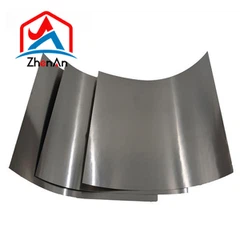
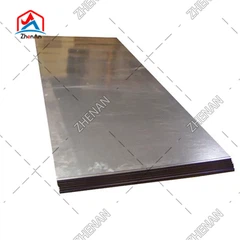
High power density and current through power diodes and transistors generate heat. Pure molybdenum metal and its alloys are the best substrate materials for power electronics due to good thermal conductivity and thermal expansion characteristics corresponding to the corresponding semiconductor materials. When used as a base plate, pure molybdenum can reliably release heat.


Why Choose us
Quality assurance
Zhenan operates a very strict quality control system, including raw material selection, production control, product inspection, fine packaging and delivery. All products undergo rigorous analysis and each order is inspected by relevant processes before shipment.
Professional service
With extensive experience in high-purity materials, we can help customers select materials, design products and provide technical support. We have independent laboratories to develop and test new materials and provide technical consultation to customers.
We Offer The Most Competitive Prices
Zhenan provides the most competitive prices for various products. We maintain close cooperation with industry leaders in China to obtain low-cost and high-quality materials. At the same time, we have established a complete supply chain system to reduce costs, and we always pursue efficient mass production and scientific management.
In its pure form, molybdenum is a silvery-grey metal with a Mohs hardness of 5.5, and a standard atomic weight of 95.95 g/mol. It has a melting point of 2,623 °C (4,753 °F); of the naturally occurring elements, only tantalum, osmium, rhenium, tungsten, and carbon have higher melting points. It has one of the lowest coefficients of thermal expansion among commercially used metals.
About 86% of pure molybdenum produced is used in metallurgy, with the rest used in chemical applications. The estimated global use is structural steel 35%, stainless steel 25%, chemicals 14%, tool & high-speed steels 9%, cast iron 6%, molybdenum elemental metal 6%, and superalloys 5%.
Pure molybdenum can withstand extreme temperatures without significantly expanding or softening, making it useful in environments of intense heat, including military armor, aircraft parts, electrical contacts, industrial motors, and filaments.
Most high-strength steel alloys (for example, 41xx steels) contain 0.25% to 8% molybdenum. Even in these small portions, more than 43,000 tonnes of molybdenum are used each year in stainless steels, tool steels, cast irons, and high-temperature superalloys.
Pure molybdenum is also valued in steel alloys for its high corrosion resistance and weldability. Molybdenum contributes corrosion resistance to type-300 stainless steels (specifically type-316) and especially so in the so-called superaustenitic stainless steels (such as alloy AL-6XN, 254SMO and 1925hMo). Molybdenum increases lattice strain, thus increasing the energy required to dissolve iron atoms from the surface.
Because of its lower density and more stable price, molybdenum is sometimes used in place of tungsten. An example is the ‘M’ series of high-speed steels such as M2, M4 and M42 as substitution for the ’T’ steel series, which contain tungsten. Molybdenum can also be used as a flame-resistant coating for other metals. Although its melting point is 2,623 °C (4,753 °F), molybdenum rapidly oxidizes at temperatures above 760 °C (1,400 °F) making it better-suited for use in vacuum environments.
Introduction to 3 Types of Pure Molybdenum
Molybdenum singl-crystal alloy
Pure molybdenum has the advantages of the low tough-brittle transition temperature, no high temperature and low-temperature grain boundary damage, good compatibility with nuclear materials, and stable high-temperature performance, which can significantly improve the stability, reliability, and working life of components. Thus pure molybdenum is widely used in high-tech fields such as electronics, machinery, and nuclear energy industries.
Molybdenum rhenium alloy
Due to the so-called “rhenium effect”, the properties of the molybdenum rhenium alloy are greatly improved, so that the strength, plasticity, and weldability of the alloy are simultaneously improved, and the alloy has a low tough-brittle transition temperature resistance. Therefore, molybdenum rhenium alloys have been widely used in the aerospace and electronics industries. Studies have shown that 11% to 50% rhenium has the best performance, and molybdenum-rhenium alloy with 40% to 50% rhenium is more widely used.
Titanium zirconium molybdenum (TZM) alloy
The TZM alloy is a superalloy formed by adding a certain amount of titanium and zirconium to molybdenum. TZM alloy has the advantages of high melting point, high strength, good elastic modulus, small coefficient of linear expansion, low vapor pressure, good electrical and thermal conductivity, strong corrosion resistance, and good mechanical properties at high temperature.
Comparative Analysis of Pure Molybdenum and Pure Tungsten: Understanding the Distinctions
Pure Molybdenum:
Pure molybdenum consists solely of molybdenum atoms, typically with a purity of 99.95% or higher. It possesses a high melting point of 2,623°C, excellent thermal and electrical conductivity, and good corrosion resistance.
Pure Tungsten:
Pure tungsten is composed solely of tungsten atoms, usually with a purity of 99.95% or higher. It has an even higher melting point of 3,422°C, excellent thermal and electrical conductivity, and superior corrosion resistance compared to molybdenum.
Density:
Pure molybdenum has a density of approximately 10.2 g/cm³, while pure tungsten has a higher density of about 19.3 g/cm³. The higher density of tungsten makes it one of the densest naturally occurring elements, contributing to its exceptional strength and durability.
Melting Point:
As mentioned earlier, pure molybdenum has a melting point of 2,623°C, while pure tungsten has a higher melting point of 3,422°C. The high melting points of both materials make them suitable for high-temperature applications.
Strength and Hardness:
Pure tungsten exhibits higher strength and hardness compared to pure molybdenum. Tungsten is renowned for its exceptional tensile strength, making it suitable for applications that require excellent mechanical performance at elevated temperatures.
Ductility:
Pure molybdenum has better ductility and toughness compared to pure tungsten. This makes molybdenum more forgiving to forming processes, such as rolling, bending, and machining.
Pure Molybdenum:
Due to its excellent thermal conductivity, high melting point, and good corrosion resistance, pure molybdenum finds applications in the aerospace industry for rocket nozzles, furnace components, electrical contacts, and heat shields. It is also used in the production of glass and ceramics, as well as in electrical and electronic devices.
Pure Tungsten:
The superior strength, high melting point, and excellent corrosion resistance of pure tungsten make it suitable for various applications. It is widely used in the lighting industry for filaments in incandescent bulbs and halogen lamps. Tungsten is also utilized in the production of heating elements, electrical contacts, X-ray tubes, and radiation shielding.
Both molybdenum and tungsten are relatively difficult to machine due to their high hardness. However, pure molybdenum is generally easier to machine compared to tungsten due to its lower density. Specialized cutting tools and techniques are required to achieve precise machining and desirable surface finish for both materials.
1. Grinding
A grinding machine crushes rock the size of footballs to the size of gravel, then uses a ball mill to further reduce the material to the size of cosmetic powder.
2. Flotation
In the flotation process, the ground ore/gangue powder is mixed with a liquid reagent and inflated. Lower-density ores rise in the foam and are collected, while useless gangue sinks and is discarded. In this way, flotation separates the metallic minerals from the useless gangue or molybdenite from copper sulfide in the case of copper/pure molybdenum.
The resulting MoS2 concentrate contains between 85% and 92% MoS2. If necessary, acid leaching can be used to further dissolve impurities such as copper and lead.
3. Calcination
MoS2 concentrate is roasted in the air at a temperature of 500-650℃ and converted into pure molybdenum calcined sand (MoO3) (also known as industrial molybdenum trioxide). The chemical reactions are as follows:
2MoS2 + 7O2 → 2MoO3 + 4SO2
MoS2 + 6MoO3 → 7MoO2 + 2SO2
2MoO2 + O2 → 2MoO3
The calcining is done in a multi-chamber furnace, in which pure molybdenum concentrate is added from the top of the furnace, moving in the opposite direction to the gas blown in from the bottom, and the airflow is heated. The large rotary rake arm constantly turns the sparry molybdenum concentrate to promote the chemical reaction, and the emission of baking furnace gas is removed by a desulfurization system or lime washing device to remove sulfur dioxide.
The obtained industrial molybdenum oxide usually contains at least 57% molybdenum and less than 0.1% sulfur. About 40-50% of molybdenum is used in this form, mainly as an alloying element in steelmaking.

Pure Molybdenum Chemical Properties
Pure molybdenum is a transition metal with an electronegativity of 2.16 on the Pauling scale. It does not visibly react with oxygen or water at room temperature, but is attacked by halogens and hydrogen peroxide. Weak oxidation of molybdenum starts at 300 °C (572 °F); bulk oxidation occurs at temperatures above 600 °C, resulting in molybdenum trioxide. Like many heavier transition metals, molybdenum shows little inclination to form a cation in aqueous solution, although the Mo3+ cation is known to form under carefully controlled conditions.
Gaseous molybdenum consists of the diatomic species Mo2. That molecule is a singlet, with two unpaired electrons in bonding orbitals, in addition to 5 conventional bonds. The result is a sextuple bond.
The application of pure molybdenum in the steel field:
In the steel field, pure molybdenum is mainly used for the production of alloy steel, stainless steel, tool steel, high-speed steel, cast iron, and roll. The use of molybdenum as an additive can enhance the strength and toughness, corrosion resistance, and wear resistance of steel, improve the hardenability, weldability, and heat-resistance of steel. The formation of molybdenum alloy by adding other elements to molybdenum, such as molybdenum lanthanum alloy and TZM alloy, has a better performance than pure molybdenum.
The application of pure molybdenum in the chemical field:
In the chemical field, pure molybdenum can be used as lubricants, catalysts, pigments, flame retardants and smoke suppressants, and corrosion inhibitors of organic polymer. The main products include molybdenum dioxide, molybdenum yellow, molybdate, ammonium paramolybdate.
The application of pure molybdenum in electronic and electrical fields:
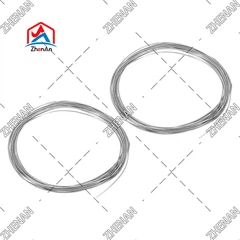
Molybdenum has good electrical conductivity and high-temperature resistance. Its thermal expansion coefficient is similar to that of glass. It's widely used in the production of the core wire, lead wire, hook, and other components of spiral filament. Molybdenum wire is also the ideal electrode wire for a cutting tool machine, which can cut a variety of steel and carbide. Its processing is stable, which can effectively improve the precision of the mold.
The application of pure molybdenum in medical, animal husbandry, and agricultural field:
Pure molybdenum is one of the essential trace elements in the human body. The proper amount of molybdenum can promote the development of the human body, enhance the storage of oxygen in the body and inhibit tumors. Ammonium molybdate is used as an active ingredient of medicines. In animal bodies, molybdenum is a molybdenum enzyme composition. Adding the molybdenum additives to the feed can achieve the goal of meeting the needs of animals. Molybdenum is also one of the essential trace elements for plant growth. Seeding using ammonium molybdenum can greatly increase the yield of flowers.
Zhenan New Metal Co., Ltd. has always focused on the research and development, production and sales of metal materials. Our factory covers an area of 30,000 square meters and has a full set of modern production equipment. It has two large-scale metal production plants and a metal material testing center. The quality of the metal materials produced is trustworthy.


Our Certificate


Asked Questions
We're professional pure molybdenum manufacturers and suppliers in China, specialized in providing high quality customized service. We warmly welcome you to buy pure molybdenum at competitive price from our factory. Contact us for more details.
Molybdenum Alloy Crucible, Moly Alloy Electrodes For Glass Furnaces, Mo Alloy Rod Stock