



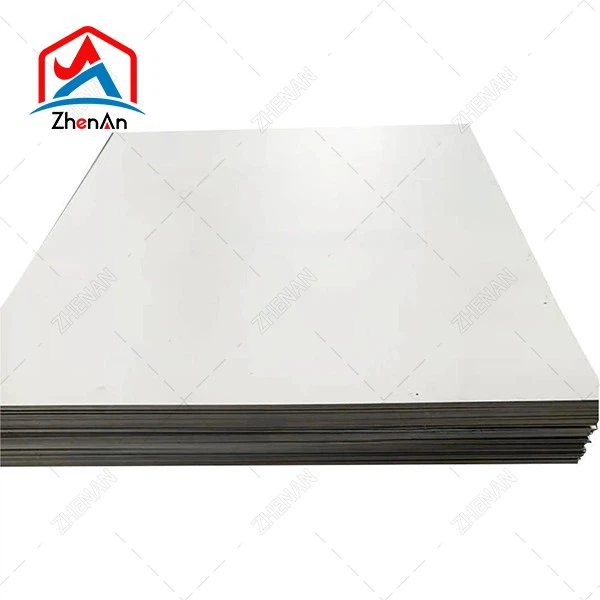

Ultra High Purity Zirconium Plate Zr702 for Industrial Use
| Grade | Features | Typical Applications |
|---|---|---|
| R60702 | Commercially pure zirconium, highest corrosion resistance | Nuclear reactors, chemical processing |
| R60704 | Alloyed with Sn, Fe, Cr for improved strength | Industrial and marine |
| R60705 | Nb alloyed, best creep resistance and mechanical strength | Aerospace, defense, nuclear |
What are zirconium plate material properties?
Corrosion Resistance: One of the most outstanding properties of zirconium plate is its exceptional corrosion resistance. It can withstand the attack of a wide range of corrosive substances, including acids (such as hydrochloric, sulfuric, and nitric acids), alkalis, and salts. This is due to the formation of a thin, adherent, and self - healing oxide layer on its surface when exposed to air or corrosive environments. This oxide layer acts as a protective barrier, preventing further corrosion of the underlying zirconium metal. As a result, zirconium plates are widely used in the chemical industry for equipment like reaction vessels, heat exchangers, and pipelines that handle corrosive chemicals.
Mechanical Properties: Zirconium has a density of about 6.51 g/cm³, which is relatively low compared to many other metals, giving it a light - weight characteristic. It has a tensile strength that can range from approximately 200 - 700 MPa, and a yield strength in the range of 150 - 600 MPa, depending on the alloy composition and processing methods. Zirconium also possesses good ductility, with an elongation at break of around 15 - 30%. This combination of strength and ductility allows zirconium plates to be formed into various shapes and withstand mechanical stresses without easy fracture.
High - Temperature Performance: Zirconium can maintain its mechanical properties at elevated temperatures. It has a melting point of about 1855 °C, which means it can operate in high - temperature environments without losing its structural integrity. In the aerospace and nuclear industries, zirconium plates are used in components that are exposed to high temperatures, such as in aircraft engines and nuclear reactors.
Neutron Economy: In the nuclear industry, zirconium has a very low neutron absorption cross - section. This property is crucial as it allows neutrons to pass through the zirconium material with minimal interference, enabling efficient nuclear fission reactions in reactors. Zirconium plates are used as fuel cladding materials to protect the nuclear fuel while maintaining the proper neutron flux for the reaction.