




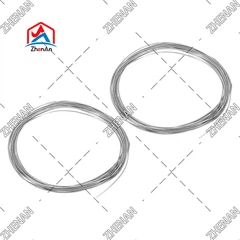
The production process of aluminum wire mainly includes the following steps: raw material procurement, smelting, extrusion, drawing, surface treatment and packaging.
Raw material procurement: The production of aluminum wire requires the use of high-purity aluminum, usually electrolytic aluminum as raw material. During the production process, the aluminum needs to undergo strict testing and screening to ensure that its quality meets the requirements.
Smelting: After the aluminum is tested and screened, it needs to be smelted. Smelting is to heat the aluminum to a high temperature and melt it into liquid aluminum for subsequent extrusion processing. During the smelting process, it is necessary to pay attention to controlling the temperature and smelting time to ensure the quality of the liquid aluminum.
Extrusion: The smelted aluminum is fed into the extruder for extrusion processing. Extrusion is to extrude the liquid aluminum into the desired shape and size through a certain die. During the extrusion process, it is necessary to control the extrusion speed and extrusion pressure to ensure the quality of the aluminum wire.
Drawing: The extruded aluminum wire needs to be drawn to make it thinner. Drawing is to stretch the aluminum wire through a series of dies to make its diameter thinner. During the drawing process, the drawing speed and drawing force need to be controlled to ensure the quality of the aluminum wire.
Surface treatment: After the aluminum wire is drawn, it needs to be surface treated. Surface treatment is to clean and treat the surface of the aluminum wire to remove surface impurities and oxides, improve its surface quality and corrosion resistance.
Packaging: After surface treatment, the aluminum wire needs to be packaged. Packaging is to put the aluminum wire into a suitable packaging container for transportation and storage. During the packaging process, it is necessary to protect the surface of the aluminum wire to avoid surface damage.