




How to Cut and Shape Tantalum Wire?
|
|
|
|
|---|---|---|
|
|
|
|
|
|
|
|
|
|
|
|
|
|
|
|
|
|
|
|
What Is the Thermal Stability of Tantalum Wire?
|
|
|
|
|---|---|---|
|
|
|
|
|
|
|
|
|
|
|
|
|
|
|
|
|
|
|
|
Why Is Tantalum Wire Suitable for High Precision Applications?
|
|
|
|---|---|
|
|
|
|
|
|
|
|
|
|
|
|
|
|
|
|
|
|
Tantalum Wire FAQ
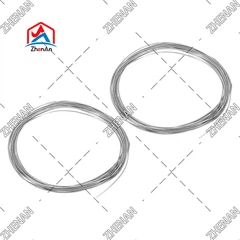
Professional customised Dia 0.1-5 mm Bright surface Tantalum wire


Q: Why is tantalum wire resistant to hydrogen embrittlement?
A: Forms a stable oxide layer that blocks hydrogen diffusion into the metal lattice.
Q: How does tantalum wire support sustainable manufacturing practices?
A: Recyclable, long service life, and enables energy-efficient high‑temperature processes.
Q: What are applications of tantalum wire in nuclear industry components?
A: Used in reactor instrumentation, corrosion‑resistant cladding, and radiation‑hard sensors.
Q: How to optimize the performance of tantalum wire in specific environments?
A: Select proper purity, surface finish, and match alloy type to chemical/temperature conditions.
Q: Why is tantalum wire chosen for high reliability electrical connections?
A: Stable conductivity, resistance to corrosion, and mechanical robustness ensure dependable joints.
Q: How does tantalum wire adapt to rapid temperature changes?
A: Low thermal expansion and high melting point minimize stress and distortion.
Q: What is the use of tantalum wire in custom engineered solutions?
A: Tailored dimensions and properties meet unique mechanical, chemical, or electrical needs.
Q: How does tantalum wire improve efficiency of energy storage systems?
A: Used in corrosion‑resistant current collectors and supports for longer cycle life.
Q: Why does tantalum wire have excellent creep resistance?
A: Strong atomic bonding and stable microstructure at high temperature limit deformation.
Q: How to assess the fatigue life of tantalum wire?
A: Perform cyclic loading tests under expected service conditions and analyze crack initiation.
Q: What is the use of tantalum wire in marine environment equipment?
A: Resists saltwater corrosion in sensors, fasteners, and underwater connectors.
Q: How does tantalum wire ensure consistent performance in batch production?
A: Uniform composition and mechanical properties give repeatable results.
Q: Why is tantalum wire critical for emerging technologies?
A: Combines high performance in extreme conditions with biocompatibility and reliability.
Q: What are applications of tantalum wire in high speed data transmission?
A: Used in low‑loss, stable signal paths for high‑frequency and RF systems.
Q: How does tantalum wire reduce maintenance needs in harsh conditions?
A: Long‑term corrosion and oxidation resistance cuts downtime and replacement frequency.
Q: Why is tantalum wire preferred for ultra pure chemical handling?
A: Does not leach contaminants, preserving chemical purity.
Q: How to design components using tantalum wire for maximum performance?
A: Optimize geometry, surface finish, and match grade to thermal, chemical, and mechanical loads.
Q: What is the use of tantalum wire in space exploration equipment?
A: Withstands extreme temperatures and vacuum, ideal for sensors and structural links.
Q: How does tantalum wire meet stringent regulatory requirements?
A: Produced to ASTM/ISO specs with documented purity and traceability.
Q: Why is tantalum wire a key material for future electronics?
A: Enables miniaturization, high reliability, and operation in demanding environments.
Q: How does tantalum wire enable precise control in manufacturing processes?
A: Stable physical and chemical behavior ensures repeatable process outcomes.
Q: What are applications of tantalum wire in advanced robotics components?
A: Used in actuators, sensors, and corrosion‑resistant joints for precision robots.
Q: How does tantalum wire enhance safety in high risk operations?
A: Reliable performance in extreme conditions reduces failure risk.
Q: Why is tantalum wire suitable for long term outdoor exposure?
A: Forms protective oxide layer, resisting weathering and corrosion.
Q: How to integrate tantalum wire into existing system designs?
A: Match dimensions, connection methods, and environmental specs to system requirements.
Q: What is the use of tantalum wire in cutting edge research equipment?
A: Provides inert, high‑precision components for analytical and synthesis instruments.
Q: How does tantalum wire support scalable production of high tech goods?
A: Consistent quality and availability enable reliable mass manufacturing.
Q: Why does tantalum wire remain indispensable in niche industries?
A: Its unique combination of corrosion resistance, high melting point, and biocompatibility meets critical needs unmet by other materials.
Q: How does tantalum wire drive progress in materials science?
A: Serves as a model for studying high‑performance refractory metals and inspires new alloy development.
Q: What are applications of tantalum wire in next generation power grids?
A: Used in corrosion‑resistant connectors, sensors, and high‑reliability components for smart grid infrastructure.
Q: How does tantalum wire minimize downtime in industrial processes?
A: Long service life and resistance to harsh conditions reduce maintenance and replacement frequency.
Q: Why is tantalum wire trusted for mission critical applications?
A: Proven reliability under extreme environments ensures consistent performance when failure is not an option.
Q: How does tantalum wire adapt to evolving technological demands?
A: Available in varied purities, sizes, and forms to suit advancing electronics, aerospace, and energy systems.
Q: What is the use of tantalum wire in sustainable energy infrastructure?
A: Applied in fuel cells, battery systems, and corrosion‑resistant components for wind/solar installations.
Q: How does tantalum wire contribute to higher productivity in manufacturing?
A: Stable properties and durability allow uninterrupted high‑quality production runs.
Q: Why is tantalum wire essential for precision engineering?
A: Maintains tight tolerances and stable characteristics under varying conditions.
Q: What are applications of tantalum wire in smart device components?
A: Enables miniature, reliable interconnects and sensors in wearable and IoT devices.
Q: How does tantalum wire reduce operational costs over time?
A: Lower replacement frequency and minimal maintenance lead to long‑term savings.
Q: Why is tantalum wire a top choice for demanding environments?
A: Withstands high temperature, corrosion, and mechanical stress where other metals fail.
Q: How does tantalum wire support global advancement in technology?
A: Provides essential material for cutting‑edge electronics, medical, aerospace, and energy systems worldwide.
Q: How does tantalum wire ensure quality in every application?
A: Manufactured to exacting standards with rigorous testing for consistency and purity.
Visit https://www.zhenanmetal.com to learn more about the product. If you would like to know more about the product price or are interested in purchasing, please send an email to info@zaferroalloy.com. We will get back to you as soon as we see your message.

who choose us?
OEM Services
We provide customized services to meet customer requirements.
Product Customization
Size range: Customization supported
Pure metal wires of various sizes can be tailored to specific needs.
Label Customization
Custom labels available for product branding.
Packaging Customization
Multiple packaging options based on customer requirements.
one-stop solution
professional team
high quality