


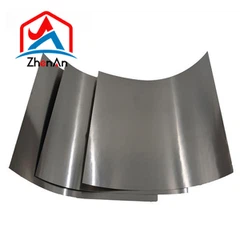
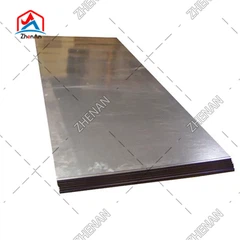




High Quality Tantalum Plate Sheet Strip Foil 0.001mm-6mm ASTM B708 R05200 Ta1 for sale
Product Description
| Commodity Name | Dia3×34mm tantalum disk Ta plate price per kg |
| Purity | Ta ≥99.95% |
| Density | 16.68 |
| Specification Range | T0.025mm x W5-1500mmx L50-3000mm |
| Surface | Bright |
| Property | Good high temperature resistance, corrision resistance, high strength, high melting point etc. |
| Usage | Heating components of vacuum high temperature furnace; Electronic industry (electronic components, electronic equipment, electronic devices) such as capacitors; Anode leads of tantalum electrolytic capacitors, vacuum electron cathode emission sources, ion sputtering and spraying materials Chemical reaction equipment, corrosion resistant fasteners, high temperature components, cathodic protection system of steel structure |
| Standard | ASTM B708 |
| Certificate | ISO 9001;2015 |
| Package | Standard plywood box with foam inside |
| Lead time | 7-25 days(depend on the quantity) |


Ta Plate – The Heavy-Duty Backbone of Industrial Engineering
When engineering applications demand a material that balances rugged durability with corrosion resistance, tantalum plate (often abbreviated as "Ta plate") emerges as a go-to solution. Unlike thinner variants, Ta plate is defined by its substantial thickness-typically ranging from 0.5 mm to 50 mm-making it ideal for high-stress, high-wear environments. This article explores the unique role of Ta plate in heavy industry, its manufacturing rigor, and why it outperforms alternatives in extreme conditions.
Defining Ta Plate: Thickness as a Functional Feature
Ta plate is engineered for structural integrity. Its thickness distinguishes it from thinner "Ta sheet" (discussed later) and positions it as a component in load-bearing or heat-resistant systems. Produced from high-purity tantalum (often 99.9% or higher) or alloyed with niobium, tungsten, or hafnium, Ta plate retains tantalum's core properties-exceptional corrosion resistance, a melting point of 3,017°C, and superior strength-to-weight ratio-even in thick formats.
Manufacturing Ta Plate: Precision in Scale
Creating thick tantalum plate requires specialized rolling and heat-treatment processes:
Ingots to Billets: Raw tantalum (extracted from ore via hydrometallurgy) is first converted into cylindrical billets using electron-beam melting (EBM) to eliminate impurities.
Hot Rolling: Billets are heated to 1,200–1,500°C and rolled into intermediate plates, reducing thickness gradually to avoid cracking.
Cold Rolling & Annealing: For tighter tolerances, plates undergo cold rolling, followed by vacuum annealing to relieve internal stress. This step is critical for thick plates, as residual stress could lead to warping under load.


