


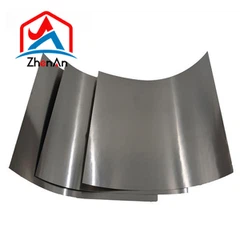
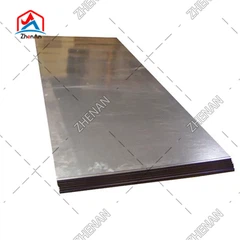




99.95%-99.99% Purity tantalum Sheet plate With Lowest Price tantalum Sheet
| Thickness (mm) | Width (mm) | Length (mm) | |
| Foil piece/rolls | 0.01-0.1 | 5-200 | 10-1000/>1000 |
| Sheet | 0.1-1 | 100- 500 | 100-1000 |
| plate | ≥1 | 100-500 | 100-1000 |


Properties of Tantalum Plate
Tantalum's unique atomic structure endows its plates with remarkable characteristics:
Corrosion Resistance: Tantalum forms a passive oxide layer (Ta₂O₅) when exposed to air or moisture, making it highly resistant to acids (including hydrochloric and sulfuric acid), alkalis, and organic solvents-even at elevated temperatures. This property is unmatched by most metals, save for gold and platinum.
High Melting Point: With a melting point of ~3,017°C (5,463°F), tantalum plate retains structural integrity in extreme heat, ideal for high-temperature environments like jet engine components or nuclear reactors.
Mechanical Strength: Tantalum plate exhibits excellent tensile strength (up to 800 MPa in annealed form) and ductility, allowing it to be machined into complex shapes without cracking.
Electrical Conductivity: It is a good conductor of electricity (conductivity ~10% of copper) and is often used in electronic applications where corrosion resistance is prioritized over conductivity.
Producing a high-quality tantalum plate involves several stages
Raw Material Purification: Tantalum ore is first processed to extract tantalum pentoxide (Ta₂O₅), which is then reduced using molten sodium or magnesium in a vacuum to produce tantalum powder.
Consolidation: The powder is compressed into ingots via powder metallurgy or electron-beam melting (EBM), a process that eliminates impurities and ensures uniformity.
Rolling and Annealing: Ingots are heated and rolled into thin plates. Intermediate annealing (heating to relieve stress) is repeated to achieve the desired thickness and flexibility.


