




Nickel Foil Thickness Guide
Selecting the Right Thickness for Industrial, Electronics, and Battery Applications
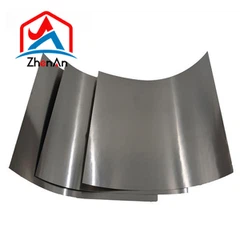
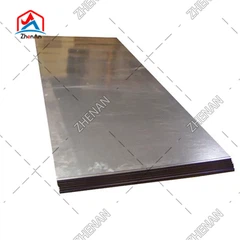
Choosing the correct Nickel Foil thickness is critical for ensuring optimal performance in battery manufacturing, electronics, and industrial applications. The thickness of Ni Foil affects mechanical strength, electrical conductivity, flexibility, and coating adhesion, making it a key consideration for both industrial and high-purity applications.
Common Thickness Ranges for Nickel Foil
1. Ultra-Thin Foil (0.01 – 0.05 mm)
Highly flexible and suitable for lithium-ion battery electrodes, R&D, and precision electronics.
Ensures excellent adhesion for coatings and uniform current distribution.
Often available as High Purity Nickel Foil (99.9%–99.99% Ni).
2. Thin Foil (0.05 – 0.1 mm)
Balances flexibility and strength.
Ideal for electronic connectors, EMI shielding, and light industrial use.
Can be supplied annealed or as-rolled depending on processing needs.
3. Medium Thickness (0.1 – 0.3 mm)
Offers good mechanical stability and dimensional control.
Suitable for battery modules, industrial heat exchangers, and chemical equipment lining.
Compatible with both Industrial Nickel Foil and High Purity Ni Foil applications.
4. Thick Foil / Sheet (0.3 – 0.5 mm and above)
Provides superior rigidity and mechanical strength.
Used in structural components, industrial equipment, and heavy-duty shielding.
Typically supplied in coil or sheet form for fabrication or stamping processes.
How Thickness Affects Performance
| Thickness | Key Benefits | Typical Applications |
|---|---|---|
| 0.01 – 0.05 mm | Flexible, thin, precise | Battery electrodes, electronics, R&D |
| 0.05 – 0.1 mm | Moderate strength & flexibility | Electronics, shielding, light industrial |
| 0.1 – 0.3 mm | Stable, durable | Battery modules, heat exchangers, chemical lining |
| 0.3 – 0.5 mm | Rigid, strong | Industrial equipment, structural Ni Foil |
Tip: For high-purity applications, thinner Nickel Foil improves coating uniformity and electrical performance. For industrial or structural use, thicker foil enhances durability and mechanical stability.
Choosing the Right Thickness
When selecting Nickel Foil, consider:
Application type – battery, electronics, or industrial
Required mechanical strength – bending, stamping, or structural support
Purity and surface finish – high-purity Ni Foil may require thinner dimensions
Processing equipment – compatibility with roll-to-roll or stamping lines
Custom thickness options are available for High Purity Nickel Foil and Industrial Nickel Foil to meet specific production requirements, including tight tolerances (±0.005 mm).
Get Expert Guidance and a Quote
For technical advice or to request a quotation for Nickel Foil, High Purity Nickel Foil, or Industrial Nickel Foil with precise thickness specifications:
Include your desired thickness, width, length, purity, and application to receive the most accurate recommendation and quotation.