


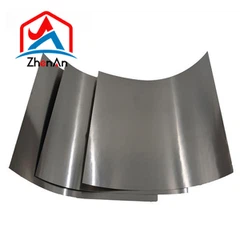
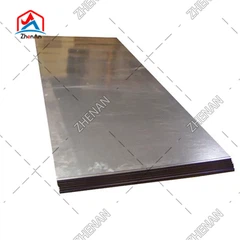




Rolling process and electrolytic process of nickel foil
Rolling process
Through multiple rolling passes, the nickel billet is gradually rolled into nickel foil of the required thickness. During the rolling process, parameters such as rolling temperature, rolling speed and reduction need to be controlled to ensure the thickness uniformity and surface quality of the nickel foil.
Electrolytic process
Using the principle of electrolysis, nickel ions are deposited on the cathode through the action of current in the electrolytic cell to form nickel foil. The electrolytic process can produce nickel foil with high purity and uniform thickness, but the production efficiency is relatively low.
Zhenan Nickel Foil Product Parameters
|
Alloy grade |
Density |
Melting point |
Thermal conductivity |
Specific heat capacity |
Elastic Modulus |
Resistivity |
|
g/cm3 |
℃ |
λ/(W/m•℃) |
J/kg•℃ |
GPa |
μΩ•m |
|
|
Ni201 |
8.89 |
1435-1446 |
79.3 |
456 |
205 |
0.085 |
|
Ni200 |
8.89 |
1435-1446 |
70.2 |
456 |
205 |
0.096 |
Zhenan Nickel Foil Product Details Picture Display


Introduction to the packaging and transportation of our metal products
We provide the material composition table and inspection report of the products.
First, pack with moisture-proof paper.
Second, pack with kraft paper.
Third, pack with foam plastic around the plywood box.
Finally, pack the product into the plywood box.
FAQ About ZhenAn
1.Q: What are your advantages?
Honest business, competitive prices, professional service in export process.
2.Q: How do we ensure quality?
Always provide pre-production samples before mass production; always conduct final inspection before shipment;
3.Q: Do you have a stable supply of raw materials?
Maintaining long-term cooperation with qualified raw material suppliers ensures the high quality of our products from the first step.
4.Q: How is your quality control?
Our quality control steps include:
(1) Confirm everything with customers before purchasing and production;
(2) Check all materials to ensure they are correct;
(3) Hire experienced workers and train them properly;
(4) Conduct inspections throughout the production process;
(5) Conduct final inspection before loading.