






99.9% Nickel Metal Sheet
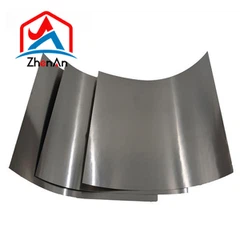
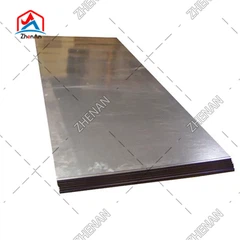
| Material: | Nickel |
| Thickness: | 0,05 mm |
| Length: | 1000 mm |
| Width: | 300 - 310 mm |
| Surface: | blank |
| Magnetisable: | yes |
| Structure: | cold rolled, not hardenable |
| Thickness Tolerance: | +/- 10% of thickness |
| Tensile Strenght: | hard rolled/semi-hard |
What is nickel sheet?
Nickel sheet is a thin sheet made of nickel. Its excellent electrical and thermal conductivity makes it widely used in many industrial fields. Nickel sheet is commonly used in the manufacture of batteries, capacitors, electronic components, petrochemical equipment, aerospace equipment, and many other applications. Nickel sheet is primarily made from nickel metal, typically processed through processes such as smelting, rolling, and wire drawing. Nickel sheet can be categorized as nickel-plated or pure nickel depending on its surface finish. Nickel-plated sheet is a metal surface coated with a layer of nickel to enhance its surface hardness and corrosion resistance. Pure nickel sheet is made from 100% pure nickel and offers enhanced electrical and thermal conductivity.
In battery manufacturing, nickel sheet is commonly used to manufacture the positive and negative electrodes of batteries. Nickel's excellent electrical conductivity and corrosion resistance make it an ideal material for battery manufacturing. Nickel sheet is also used to manufacture capacitors, devices that store electrical charge and are commonly used in electronic circuits. Nickel sheet's high electrical conductivity and plasticity make it a key material for capacitors.
In the petrochemical industry, nickel sheet is commonly used to manufacture catalysts. Catalysts are substances used to accelerate chemical reactions, and nickel sheet is widely used in petroleum processing due to its excellent catalytic properties. Nickel sheet is also used in the manufacture of petrochemical equipment such as pipes, valves, and heat exchangers.
In the aerospace industry, nickel sheet is often used to manufacture turbine blades for aircraft engines. Nickel's high-temperature performance and oxidation resistance make it a preferred material for turbine blades. Furthermore, nickel flakes can be used in aircraft structural materials and components requiring high corrosion resistance.
Overall, nickel flakes are a very important material with broad application prospects. Its excellent physical and chemical properties make it an indispensable material in many industrial fields. With industrial development and technological advancements, nickel flakes are expected to play an increasingly important role in future applications.


