






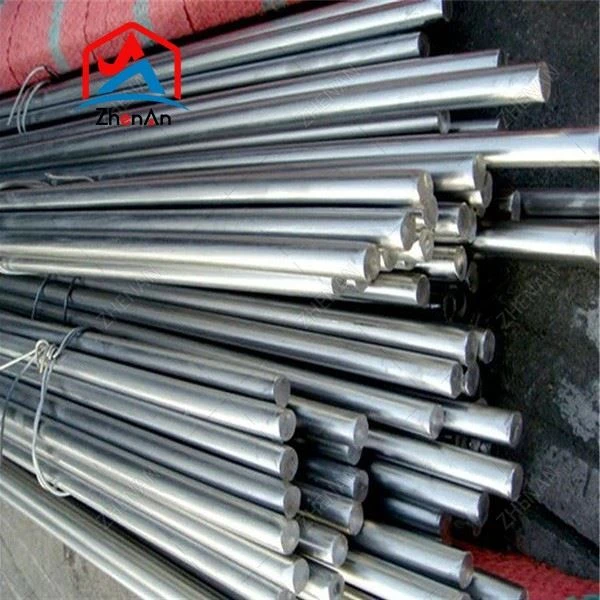


High Purity zirconium, The Manufacturer Wholesale 702 zirconium rod Per Kg Prices
Zirconium Rod Propertier
|
Grade |
Zr 702 R60702 |
Zr 704 R60704 |
Zr 705 R60705 |
|
Tensile Strength, ksi (MPa) |
55 (380) |
60 (415) |
80 (550) |
|
Yield Strength, ksi (MPa) |
30 (205) |
35 (240) |
55 (380) |
|
Elongation, % |
16 |
14 |
16 |
|
Condition |
Annealed |
Annealed |
Annealed |
Zirconium Rod Material Standards and Sizes
Zirconium rod material standards and sizes are defined by international specifications to ensure consistency, quality, and performance in critical industrial applications. The most commonly referenced standards include ASTM B350, ASTM B351, and AMS 4928, which outline the acceptable chemical composition, mechanical properties, dimensional tolerances, and testing requirements for zirconium rods. These standards are essential for industries such as nuclear energy, chemical processing, and aerospace, where reliability and safety are paramount.
Zirconium rods are typically available in two primary grades: Zr 702 and Zr 705. Zr 702 is unalloyed zirconium with a minimum purity of 99.2%, while Zr 705 includes niobium as an alloying element to enhance strength and mechanical performance. Both grades are valued for their corrosion resistance, especially in acidic or high-temperature environments. In terms of sizes, zirconium rods are manufactured in a wide range of diameters, generally from 3 mm (1/8 inch) up to 150 mm (6 inches) or more, and in various lengths, often customizable based on customer requirements. Standard lengths typically range from 1 meter to 6 meters, but longer or shorter rods can be produced as needed.
The surface finish of zirconium rods may vary, including options such as as-forged, hot-finished, cold-drawn, or polished, depending on the intended application. Precise dimensional control and adherence to material standards are critical, particularly in applications such as nuclear fuel cladding, where exact specifications directly impact performance and safety. Suppliers of zirconium rods often provide material test certificates (MTCs) to confirm compliance with the relevant standards. Understanding zirconium rod material standards and sizes is essential for engineers and procurement specialists to select the correct product for specific operational needs, ensuring safety, performance, and regulatory compliance in critical applications.


