




Technical Parameters of Niobium
Niobium and tantalum often coexist, but niobium's content in the Earth's crust is approximately 2.4 × 10⁻³%, ten times that of tantalum. It primarily occurs in the form of columbite. Generally, niobium's corrosion resistance is higher than that of titanium and zirconium, but slightly lower than that of tantalum. Because niobium is less expensive than tantalum, it can be used in place of the more expensive tantalum in certain corrosive media. Furthermore, niobium's relative density is only about half that of tantalum. For components of the same size, the amount of niobium required is only about half that of tantalum, reducing costs.
Like tantalum, niobium forms a passive corrosion-resistant metal by forming a dense oxide film on its surface. Consequently, niobium's corrosion resistance can sometimes approach that of tantalum. Niobium is primarily used in strong, reducing acids at low temperatures. However, it is not corrosion-resistant in media such as hydrofluoric acid, hot concentrated sulfuric acid, sodium hydroxide, and potassium hydroxide. Its corrosion rate is also relatively high in hot concentrated hydrochloric acid and hot concentrated phosphoric acid. Caution should be exercised when using niobium in these media. Niobium has a boiling point of 4927°C and a melting point of 2468°C, making it a refractory metal. Niobium can be formed at medium temperatures between 350°C and 400°C, or at high temperatures between 950°C and 1000°C. It can be fully annealed at around 1200°C. Niobium begins to oxidize in air at 230°C and becomes intensely oxidized at 300°C.
At temperatures above 400°C, the oxide film breaks down and falls off, greatly accelerating the oxidation rate. Niobium begins to nitride at 600°C in air. Niobium absorbs hydrogen in hydrogen-containing media between 250°C and 950°C. Therefore, welding and heat treatment of niobium should be performed in a vacuum or under inert gas protection. Heat treatments above 300°C should be performed in a vacuum, under inert gas protection, or under high-temperature coating. When niobium equipment and containers are exposed to the atmosphere, the operating temperature should generally not exceed 230°C. Higher temperatures may only be used when there is no guarantee of atmospheric contact. Niobium welding requires the same high-purity inert gas shielding as tantalum, and should also be placed under inert gas protection at temperatures above 230°C. It is best to stop the inert gas supply after the niobium weldment cools to below 200°C.
Niobium has some applications in pressure vessels, but there are no formal standards for niobium vessels. Pure niobium is primarily used in pressure vessels. Adding approximately 1% zirconium can improve strength, but slightly reduces corrosion resistance and ductility.
Chinese Niobium Standards
Standard Number Standard Name
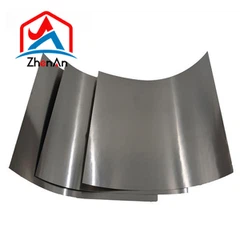
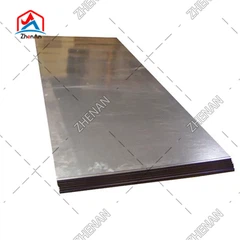
GB/T3630-1983 Niobium Plate, Strip, and Foil
GB/T14842-1993 Niobium Seamless Tube
GB/T8183-1987 Tantalum and Tantalum Alloy Foil
GB/T6869-1998 Niobium Bar
US Niobium Standards
Standard Number Standard Name
ASTM B393-2003 Niobium Plate, Sheet, and Strip
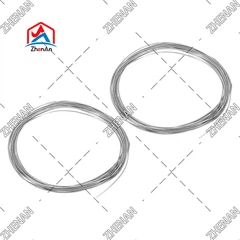
ASTM B392-2003 Niobium Rod and Wire
ASTM B394-2003 Niobium Seamless and Welded Tubes
Visit https://www.zhenanmetal.com to learn more about the product. If you would like to know more about the product price or are interested in purchasing, please send an email to info@zaferroalloy.com. We will get back to you as soon as we see your message.