




Annealed vs Unannealed Nickel Foil
Key Differences in Performance, Processing, and Applications
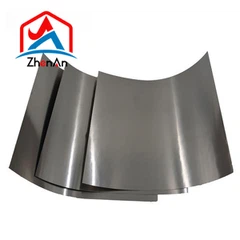
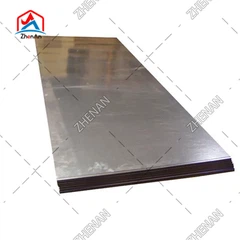
When sourcing Nickel Foil, buyers often encounter two common material conditions: annealed Nickel Foil and unannealed (as-rolled) Nickel Foil. Understanding the differences between these two options is critical for selecting the right Ni Foil for your application, especially in battery manufacturing, electronics, and industrial processing.
What Is Annealed Nickel Foil?
Annealed Nickel Foil undergoes a controlled heat treatment process after rolling. This process relieves internal stress and alters the metal's microstructure.
Key characteristics of annealed Nickel Foil:
Higher ductility and flexibility
Improved formability for bending and stamping
Reduced risk of cracking during processing
Because of these properties, annealed High Purity Nickel Foil is widely used in applications where precision forming or repeated deformation is required.
Typical applications include:
Lithium-ion battery current collectors
Electronic connectors and terminals
Thin-gauge Ni Foil for precision components
For battery and electronics manufacturers, annealed Nickel Foil helps maintain stable performance during automated production.
What Is Unannealed (As-Rolled) Nickel Foil?
Unannealed Nickel Foil, also known as as-rolled Nickel Foil, is supplied without additional heat treatment after cold rolling.
Key characteristics of unannealed Nickel Foil:
Higher tensile strength and hardness
Better dimensional rigidity
Lower elongation compared to annealed foil
This form of Industrial Nickel Foil is often selected when structural stability is more important than flexibility.
Common applications include:
Industrial shielding components
Mechanical parts requiring stiffness
Applications where forming is minimal
Unannealed Ni Foil can offer improved durability in static or load-bearing conditions.
Annealed vs Unannealed Nickel Foil: Comparison
| Property | Annealed Nickel Foil | Unannealed Nickel Foil |
|---|---|---|
| Ductility | High | Moderate |
| Hardness | Lower | Higher |
| Formability | Excellent | Limited |
| Processing Risk | Low | Higher during bending |
| Typical Use | Batteries, electronics | Industrial components |
How to Choose the Right Nickel Foil Condition
Selecting between annealed and unannealed Nickel Foil depends on how the material will be processed, not only on purity or thickness.
Choose annealed Nickel Foil if your process involves bending, stamping, or roll-to-roll production.
Choose unannealed Nickel Foil if rigidity, strength, and dimensional stability are priorities.
Providing details such as thickness, purity level, and application environment allows suppliers to recommend the optimal Ni Foil condition.
Custom Annealing Options Available
For specialized requirements, Nickel Foil can be supplied with custom annealing conditions, balancing strength and flexibility to meet specific production needs.
To discuss technical requirements or request a quotation for Nickel Foil or High Purity Nickel Foil, please contact:
Email: info@zaferroalloy.com