




How Does Tantalum Wire Perform in Cryogenic Environments?
|
|
|
|---|---|
|
|
|
|
|
|
|
|
|
|
|
|
|
|
|
Why Does Tantalum Wire Have a Low Thermal Expansion Coefficient?
|
|
|
|---|---|
|
|
|
|
|
|
|
|
|
|
|
|
How to Improve the Surface Finish of Tantalum Wire?
|
|
|
|
|---|---|---|
|
|
|
|
|
|
|
|
|
|
|
|
|
|
|
|
|
|
|
|
|
|
|
|
Tantalum Wire FAQ
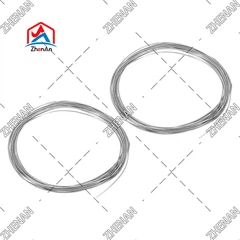
Professional customised Dia 0.1-5 mm Bright surface Tantalum wire


Q: What is the compatibility of tantalum wire with chemicals?
A: Resistant to most acids and alkalis, but attacked by hydrofluoric acid and fuming sulfuric acid.
Q: How to cut and shape tantalum wire?
A: Use precision tools, EDM, or laser cutting; avoid excessive force to prevent work‑hardening cracks.
Q: What is the thermal stability of tantalum wire?
A: Remains stable up to ~3000 °C in vacuum/inert gas, minimal property change with temperature.
Q: Why is tantalum wire suitable for high precision applications?
A: Consistent dimensions, excellent surface finish, and stable mechanical properties.
Q: What are market trends for tantalum wire?
A: Growing demand in electronics, medical devices, and aerospace; driven by miniaturization and reliability needs.
Q: How to prevent oxidation of tantalum wire during processing?
A: Use inert atmosphere or vacuum during heating and welding.
Q: What cost considerations when buying tantalum wire?
A: Purity grade, diameter, quantity, supplier, and market tantalum price.
Q: What key parameters to check before purchasing tantalum wire?
A: Purity, diameter tolerance, tensile strength, surface quality, and compliance with relevant standards.
Q: What innovations exist in tantalum wire manufacturing technology?
A: Improved continuous drawing, cleaner powder metallurgy, and additive manufacturing methods.
Q: What is the environmental impact of tantalum wire production?
A: Mining impacts; however, recycling reduces waste and energy use in production.
Q: How does tantalum wire contribute to electronic component reliability?
A: Its stability and corrosion resistance ensure long life and consistent performance in capacitors and sensors.
Q: How does tantalum wire perform under vacuum and air conditions?
A: Performs excellently in vacuum; in air, forms protective oxide above ~200 °C, limiting further oxidation.
Q: What maintenance tips for tantalum wire in long term use?
A: Keep clean, avoid mechanical damage, store in dry inert environment, inspect regularly.
Q: What are common defects in tantalum wire and how to avoid them?
A: Cracks, inclusions, poor surface; avoid by strict process control and quality testing.
Q: What is the role of tantalum wire in capacitor production?
A: Forms anode leads and supports in tantalum electrolytic capacitors for reliable current flow.
Q: How to identify genuine tantalum wire from counterfeit products?
A: Verify purity via assay, check supplier certification, examine physical properties, and request material test reports.
Q: What is the impact of tantalum ore supply on tantalum wire price?
A: Limited ore supply raises tantalum metal cost, directly increasing tantalum wire price.
Q: What is the use of tantalum wire in high temperature furnace components?
A: Serves as heating elements, supports, and thermocouple sheaths due to high melting point and stability.
Q: Why does tantalum wire have high ductility?
A: Its body‑centered cubic structure allows extensive plastic deformation before fracture.
Q: How to calculate load capacity of tantalum wire in structural applications?
A: Use tensile strength and cross‑sectional area; factor in safety margin for operating conditions.
Q: What are standards for packaging and shipping tantalum wire?
A: Sealed, moisture‑free containers; labeled with grade, dimensions, and compliance info per ASTM/ISO guidelines.
Q: How does tantalum wire improve performance of sensors?
A: Provides corrosion‑resistant, stable electrical contacts and structural support in harsh environments.
Q: What are challenges in drawing fine diameter tantalum wire?
A: Work hardening, surface defects, and maintaining uniformity require careful die design and lubrication.
Q: How to join tantalum wire with other materials?
A: Use TIG or electron beam welding with compatible filler; mechanical fastening with isolation layers if needed.
Q: What is the long term stability of tantalum wire in corrosive environments?
A: Excellent; forms passive oxide layer that protects against most acids and salts.
Q: What is the use of tantalum wire in heating elements?
A: Withstands high temps in vacuum/inert gas furnaces for uniform heating.
Q: What factors affect the tensile strength of tantalum wire?
A: Purity, cold working degree, heat treatment, and diameter.
Q: Why is tantalum wire preferred for vacuum deposition processes?
A: High melting point, low vapor pressure, and chemical inertness prevent contamination.
Q: How to measure the resistivity of tantalum wire?
A: Use four‑point probe or Kelvin bridge method at controlled temperature.
Q: What are recycling methods for used tantalum wire?
A: Melting and reprocessing via powder metallurgy or electron beam melting to recover pure metal.
Q: What is the role of tantalum wire in advanced battery technologies?
A: Used in current collectors and as a corrosion‑resistant substrate for solid‑state batteries.
Q: How to ensure uniform diameter in tantalum wire production?
A: Precision die control, consistent drawing speed, and real‑time monitoring.
Q: What are differences between annealed and cold worked tantalum wire?
A: Annealed is softer and more ductile; cold worked is stronger but less ductile.
Q: What is the use of tantalum wire in precision resistor manufacturing?
A: Its stable resistivity and low temperature coefficient suit high‑accuracy resistors.
Q: How does tantalum wire resist attack from molten metals?
A: Forms stable oxide layer and remains chemically inert to many molten metals.
Q: Why does tantalum wire maintain integrity at extreme temperatures?
A: Extremely high melting point and strong atomic bonds prevent degradation.
Q: How to select the right tantalum wire grade for chemical processing?
A: Choose high purity (e.g., 99.95%) and consider corrosion data for specific chemicals.
Q: What are applications of tantalum wire in high frequency electronics?
A: Used in inductors, RF connectors, and shielding due to stable electrical properties.
Q: How does tantalum wire enhance signal transmission in circuits?
A: Low resistive losses and stable performance over wide temperature range improve signal fidelity.
Q: What are common testing methods for tantalum wire quality control?
A: Dimensional inspection, chemical analysis (ICP-OES), tensile testing, surface examination, and resistivity measurement.
Q: How to store tantalum wire to prevent moisture damage?
A: Keep in sealed, desiccated containers away from humidity and corrosive vapors.
Q: Why is tantalum wire used in critical aerospace wiring systems?
A: Offers high corrosion resistance, reliability in extreme temperatures, and lightweight strength.
Q: How does tantalum wire support miniaturization of electronic devices?
A: Allows fine diameters with stable properties, fitting compact high-performance designs.
Q: What is the role of tantalum wire in radiation resistant components?
A: Maintains mechanical and electrical stability under high radiation exposure.
Q: How to determine the melting point of tantalum wire?
A: Use high‑temperature optical pyrometry or differential thermal analysis under controlled atmosphere.
Q: What is the use of tantalum wire in specialized welding electrodes?
A: Provides inert, high‑temp electrode material for reactive metal welding.
Q: How does tantalum wire perform in cryogenic environments?
A: Retains ductility and strength, showing no embrittlement at low temperatures.
Q: Why does tantalum wire have low thermal expansion coefficient?
A: Due to its strong metallic bonding and crystal structure, minimizing dimensional changes with temperature.
Q: How to improve the surface finish of tantalum wire?
A: Use precision drawing, electropolishing, or chemical polishing processes.
Q: What are applications of tantalum wire in high purity material synthesis?
A: Acts as container or heating element to avoid contamination in ultra‑pure processes.
Q: How does tantalum wire contribute to longer service life of components?
A: Resists corrosion and wear, ensuring durability in harsh conditions.
Q: Why is tantalum wire suitable for high voltage applications?
A: High dielectric strength and stable insulation properties under stress.
Q: How to calculate the weight of tantalum wire for a given length and diameter?
A: Use volume × density; Weight = π×(d/2)²×length×density (d in meters, density ~16.6 g/cm³).
Q: What is the use of tantalum wire in corrosion resistant fasteners?
A: Provides durable, non‑rusting fastening in aggressive chemical or marine environments.
Q: How does tantalum wire reduce signal loss in communication systems?
A: Low resistive losses and stable impedance over temperature and frequency.
Q: What are challenges in machining tantalum wire for complex shapes?
A: Hardness, work hardening, and low thermal conductivity make cutting and drilling difficult.
Q: Why is tantalum wire non magnetic?
A: Its paramagnetic nature is extremely weak, effectively non‑magnetic for practical uses.
Q: How does tantalum wire support development of next generation semiconductors?
A: Enables contamination‑free high‑temp processes and reliable interconnects.
Q: What is the use of tantalum wire in precision instrument components?
A: Ensures accuracy and stability in measuring and control devices.
Q: How to verify the purity of tantalum wire?
A: Perform assay by ICP-MS/OES or GDMS against certified standards.
Q: What is the role of tantalum wire in high temperature sensor fabrication?
A: Withstands sensor operating temperatures while providing stable electrical connections.
Visit https://www.zhenanmetal.com to learn more about the product. If you would like to know more about the product price or are interested in purchasing, please send an email to info@zaferroalloy.com. We will get back to you as soon as we see your message.

who choose us?
OEM Services
We provide customized services to meet customer requirements.
Product Customization
Size range: Customization supported
Pure metal wires of various sizes can be tailored to specific needs.
Label Customization
Custom labels available for product branding.
Packaging Customization
Multiple packaging options based on customer requirements.
one-stop solution
professional team
high quality